Master's Thesis: Can Accessibility Drive Design Innovation?
Exploring the creative potential and limitations of future design trends
Context
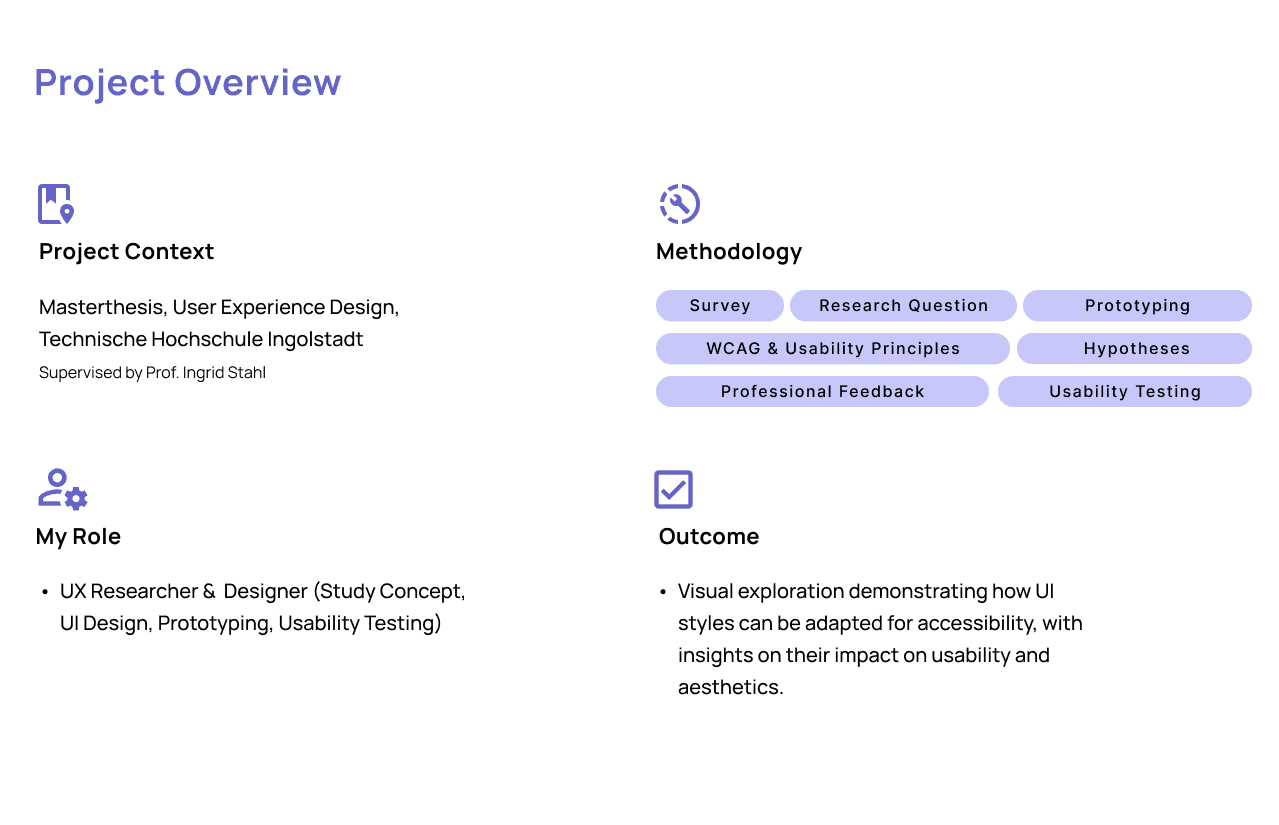
Master Thesis
Duration
6 months
Grade
1.0
Year
2025
Problem
When “beautiful” design leaves millions behind...

Digital design often prioritizes aesthetics and trends over accessibility, creating barriers for users with visual or cognitive impairments. While assistive technologies like screen readers exist, visual accessible design often falls short. Many interfaces remain difficult to navigate visually, leading to confusion, frustration, and exclusion.
Solution
From Visual Barriers to Accessible Design Trends
The solution lies in rethinking design trends not as barriers to accessibility, but as opportunities.
With thoughtful design decisions, visual accessibility and aesthetic appeal can be balanced. This demonstrates that future design trends can be both visual accessible and aesthetic.
Importance of Aesthetic: Design Trends in Digital Interfaces
In today's fast-evolving digital world, aesthetic appeal plays a crucial role in user experience design. The visual style of digital interfaces, often influenced by current design trends, has a significant impact on how users perceive and interact with products.
Visual Barriers in Trend-Driven Design
Design trends support visual appeal, but often create visual barriers if accessibility is not taken into account. Problems such as low contrast, complex visual hierarchies, or ambiguous visual cues can significantly impair usability and orientation.
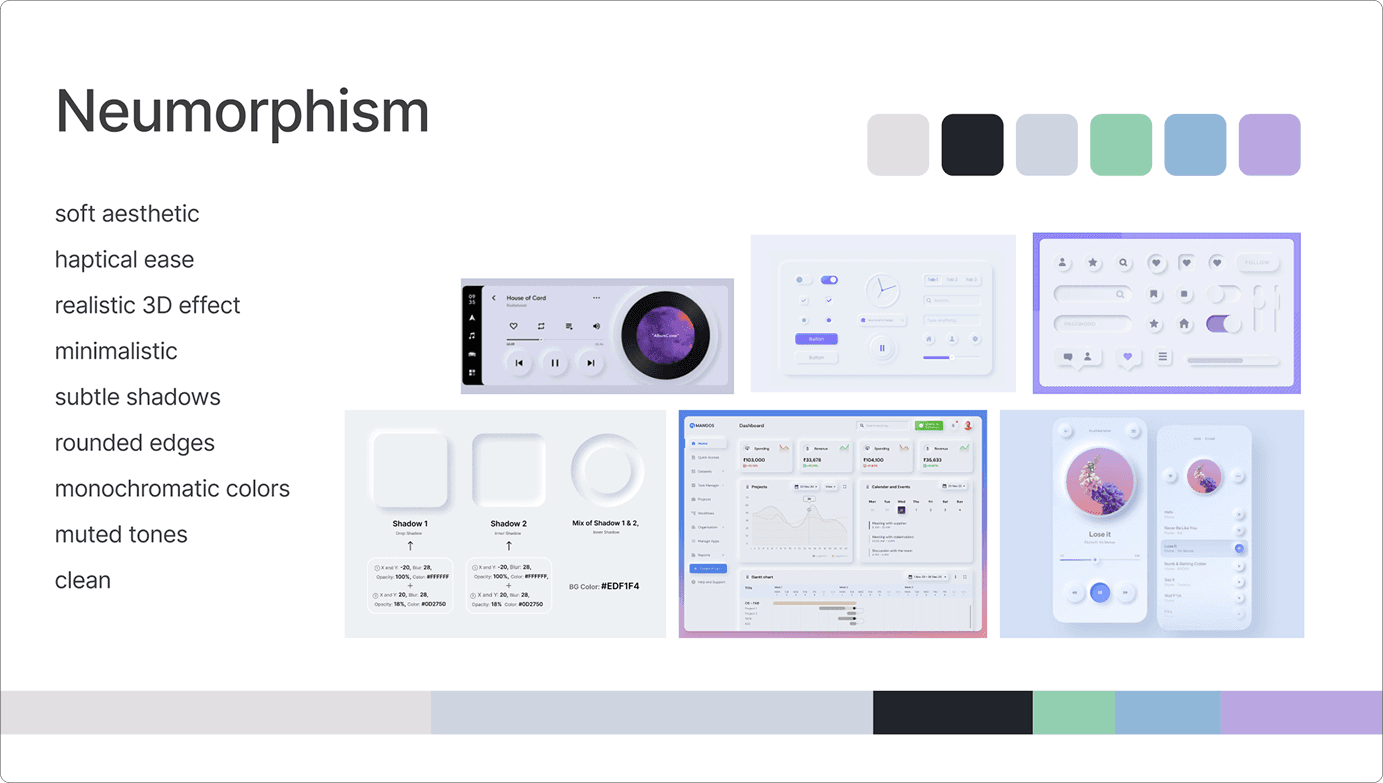
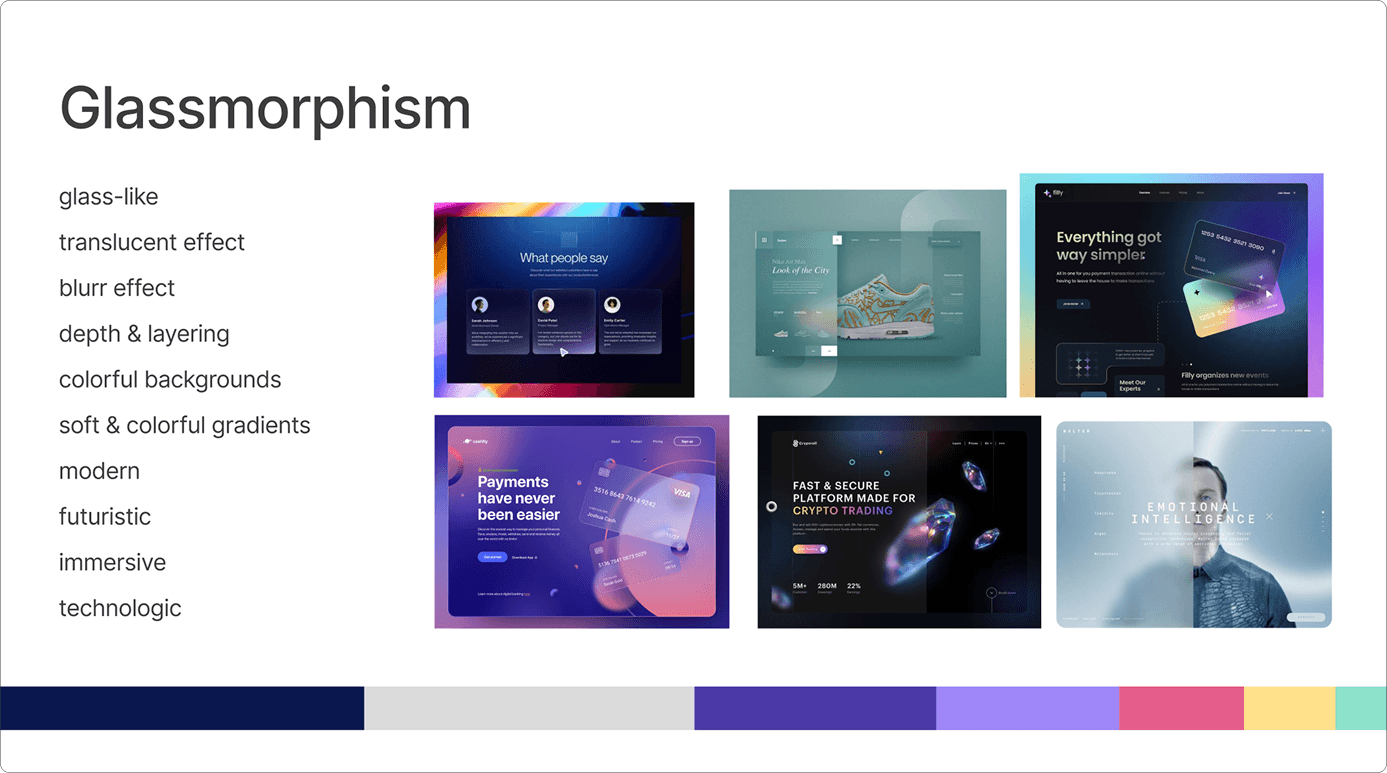
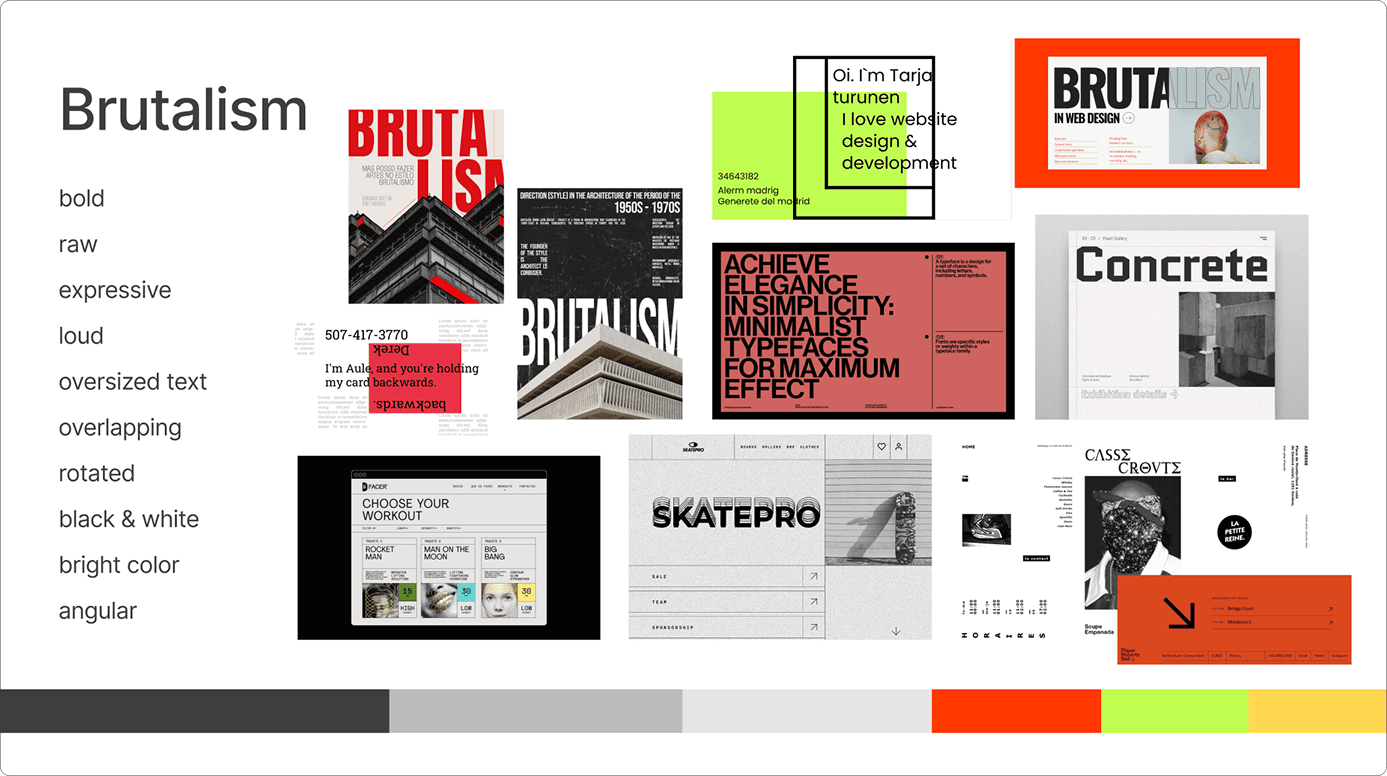
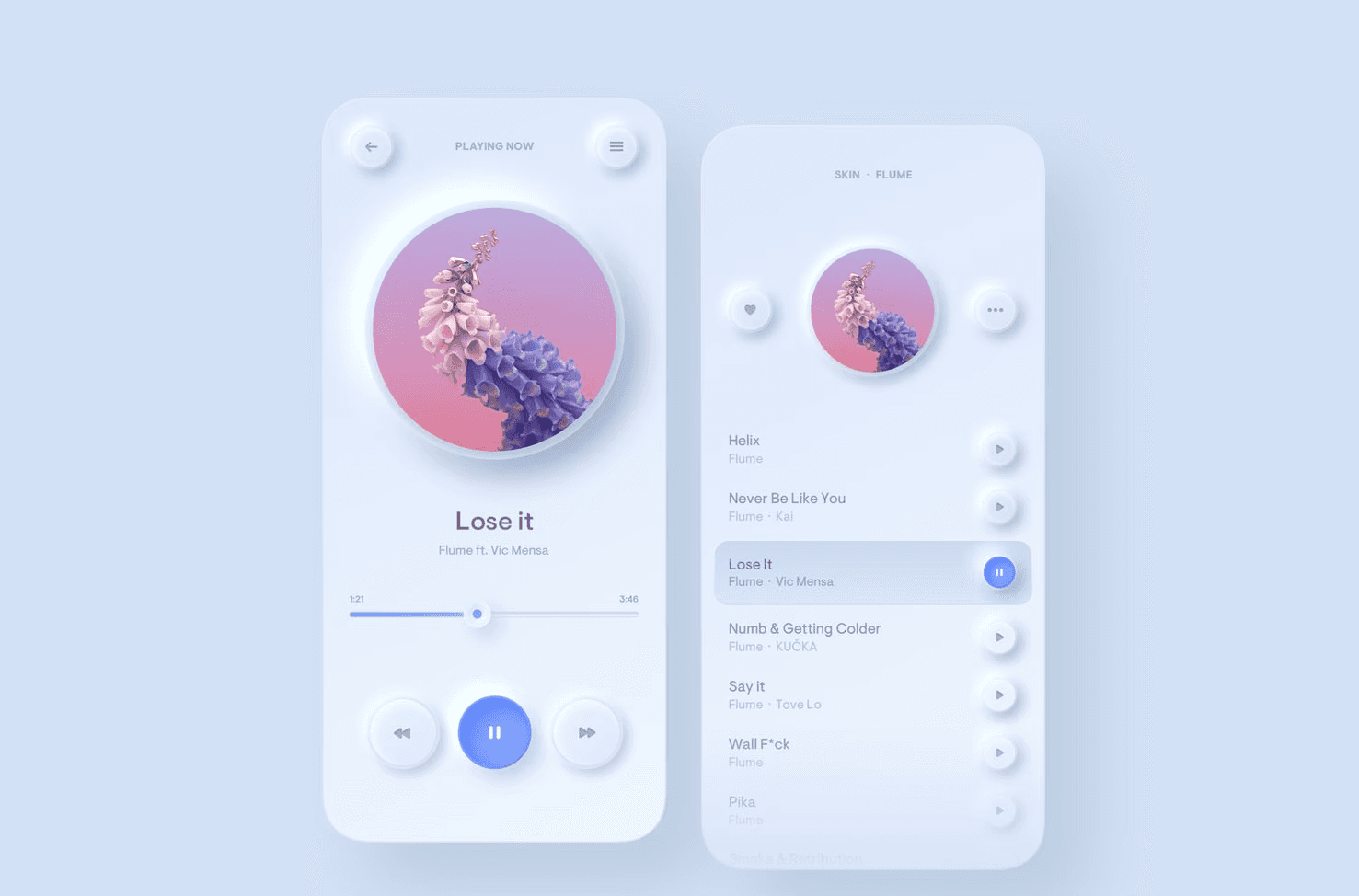
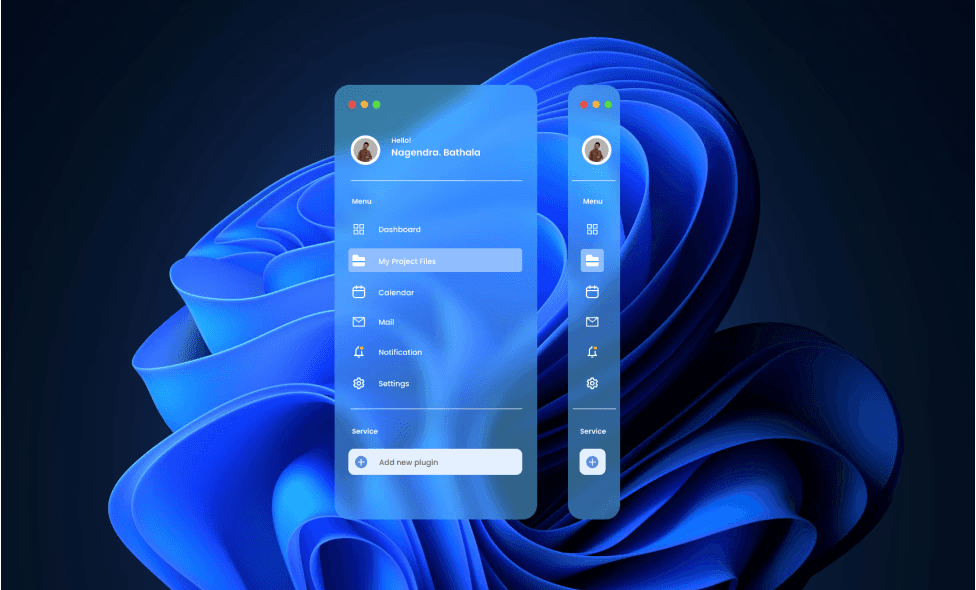
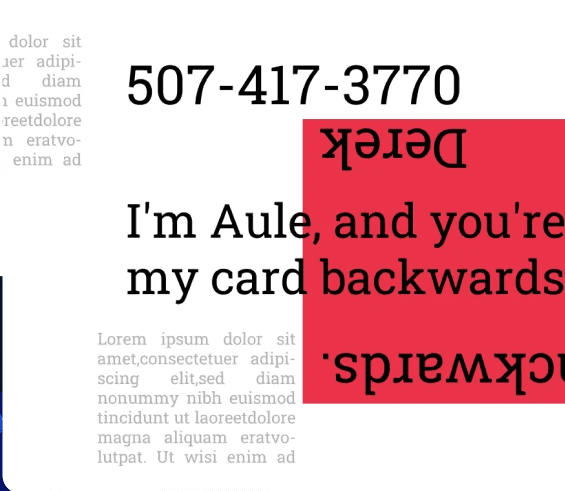
Based on recurring and particularly strong accessibility criticism, I selected Neumorphism, Glassmorphism, and Brutalism as case studies to examine these limitations and explore their potential for accessible design.
Examples of Neumorphism, Glassmorphism, and Brutalism (Sources: Pinterest, Dribbble):
Study Goal
Exploring the creative potential and limitations of design trends
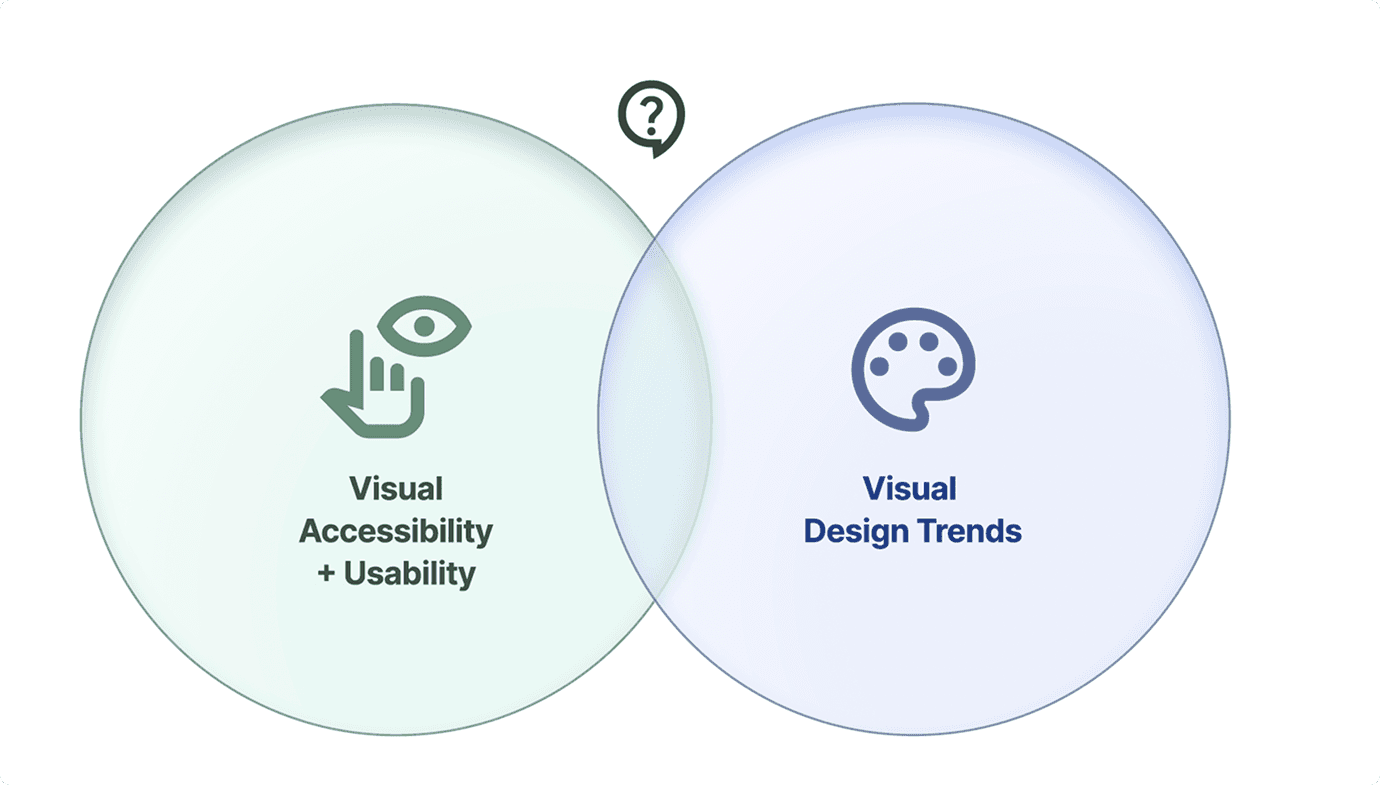
In this research, the goal was to better understand how visual accessibility, usability and visual design trends can actually work together, instead of being in conflict.
The study explored how the challenges of accessibility can be met through creative design adaptations and whether it’s possible to improve accessibility without losing what makes a trend visually unique.
Research Questions:
RQ: To what extent can visual design trends be adapted to improve usability and visual accessibility without compromising their core aesthetic identity?
RQ2: How do accessible contrast and usability adaptations affect user experience, user satisfaction, and perceived aesthetic appeal?
Trend Variation Approach
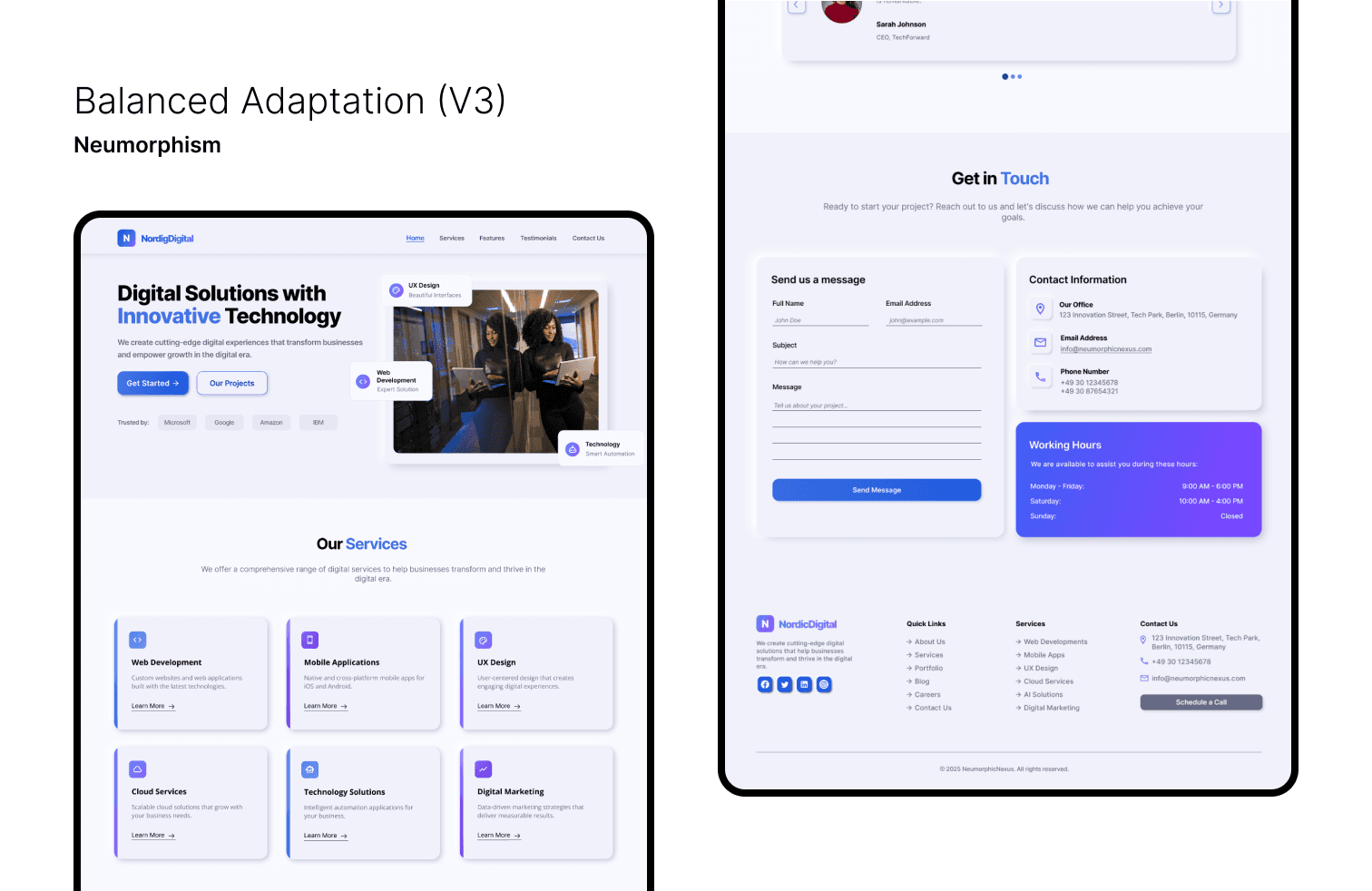
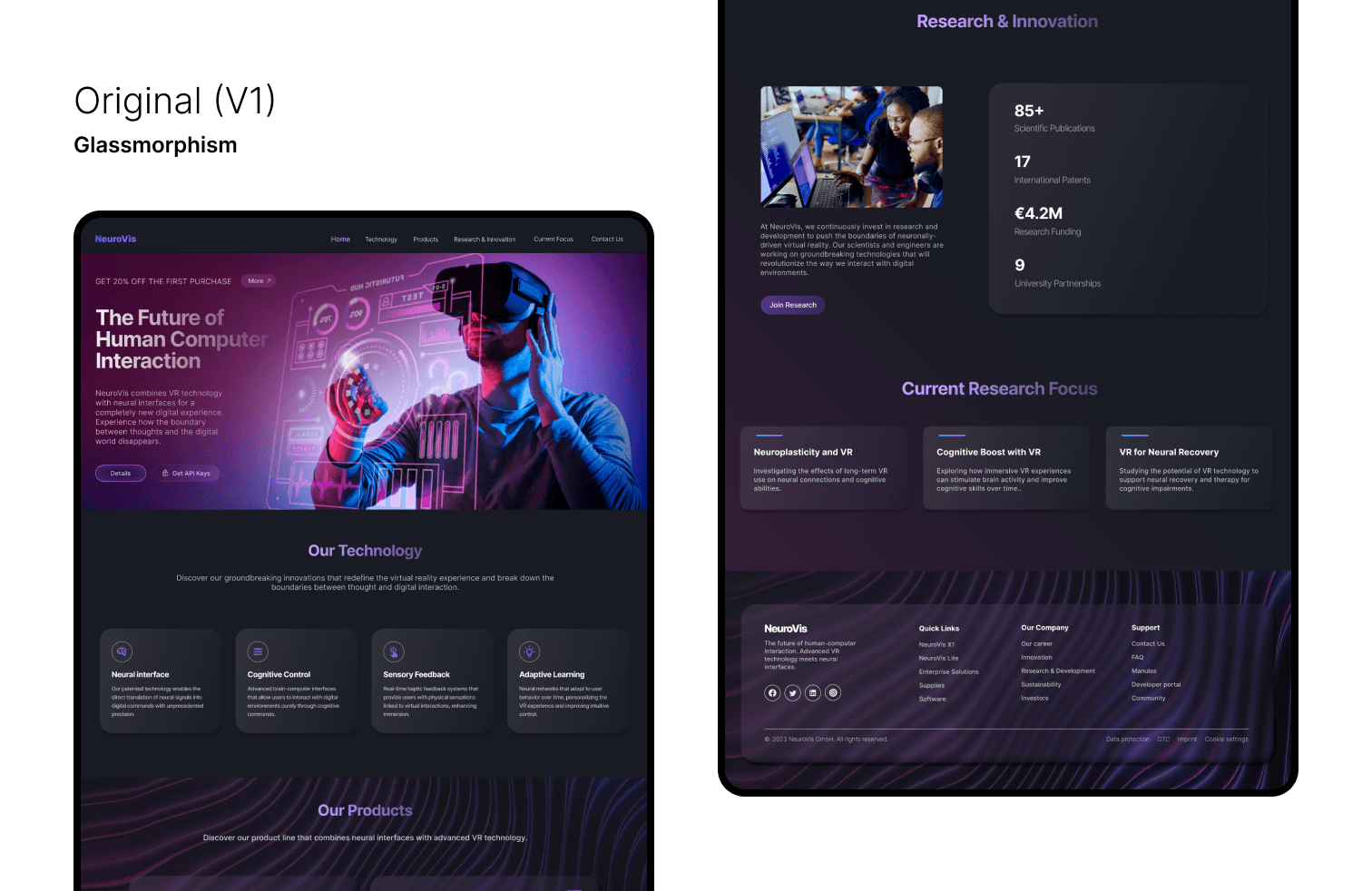
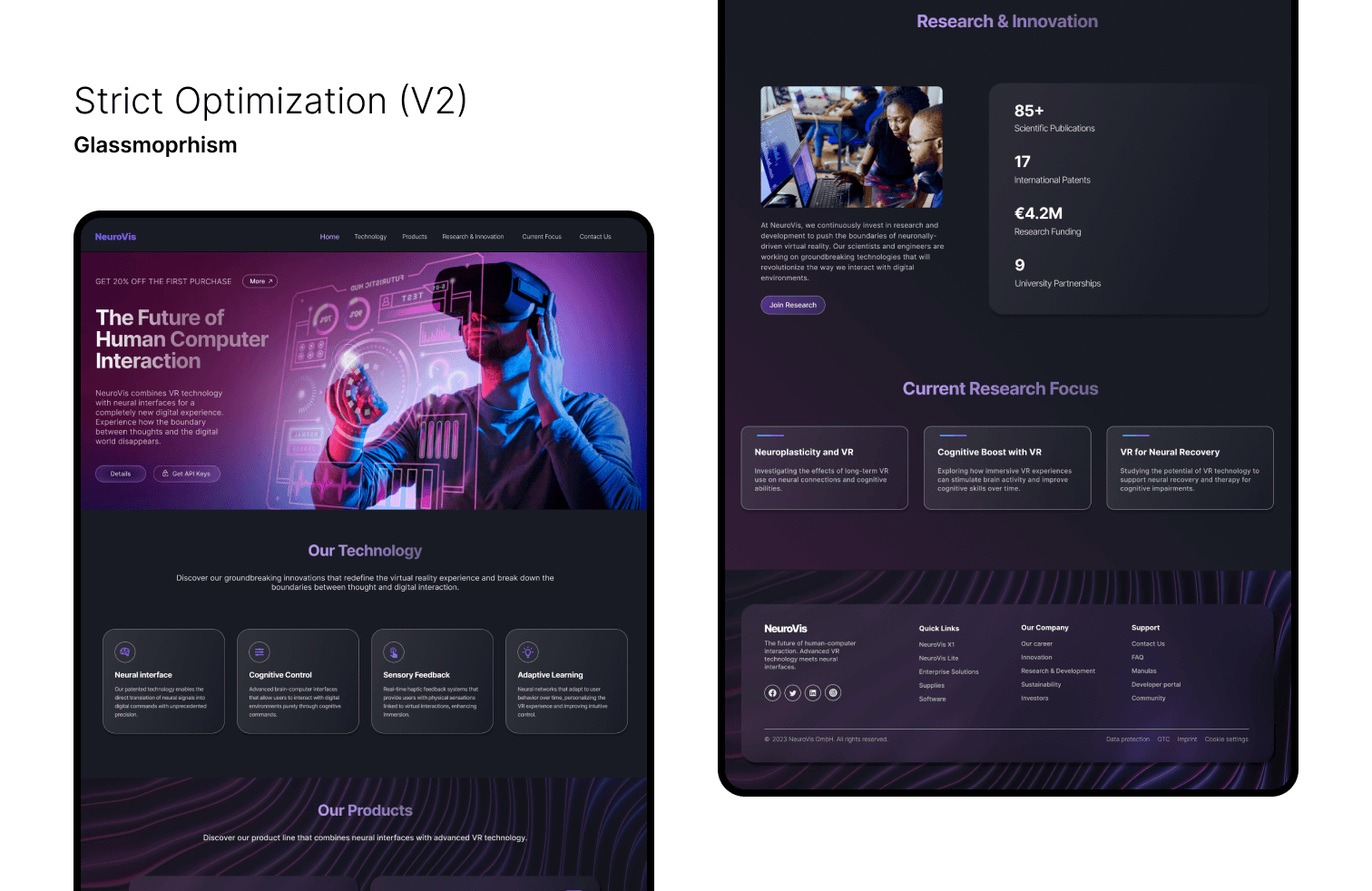
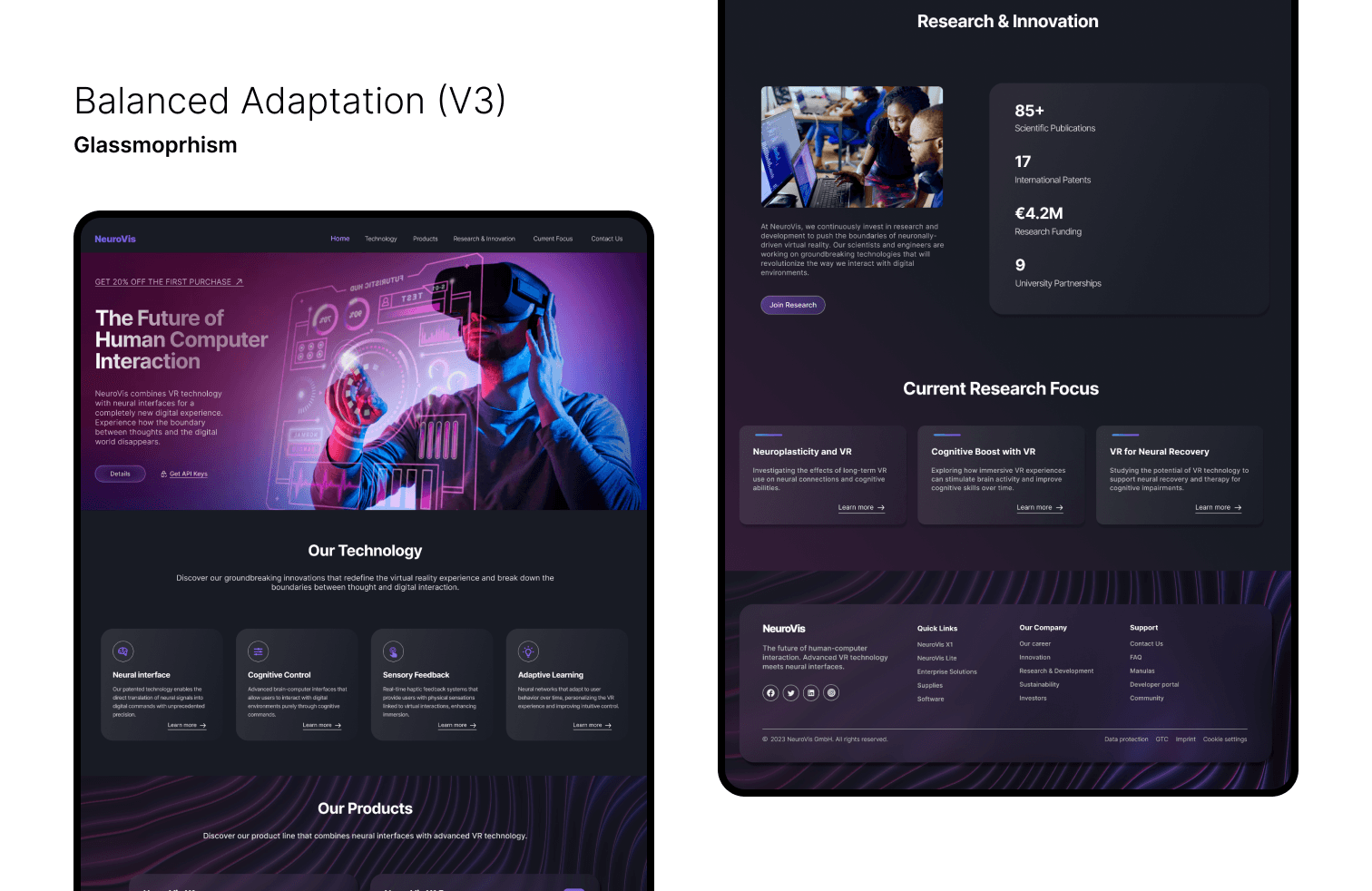
To better understand the trade-off between aesthetics and accessibility, I created three variations of each design trend, representing different levels of adaptation.
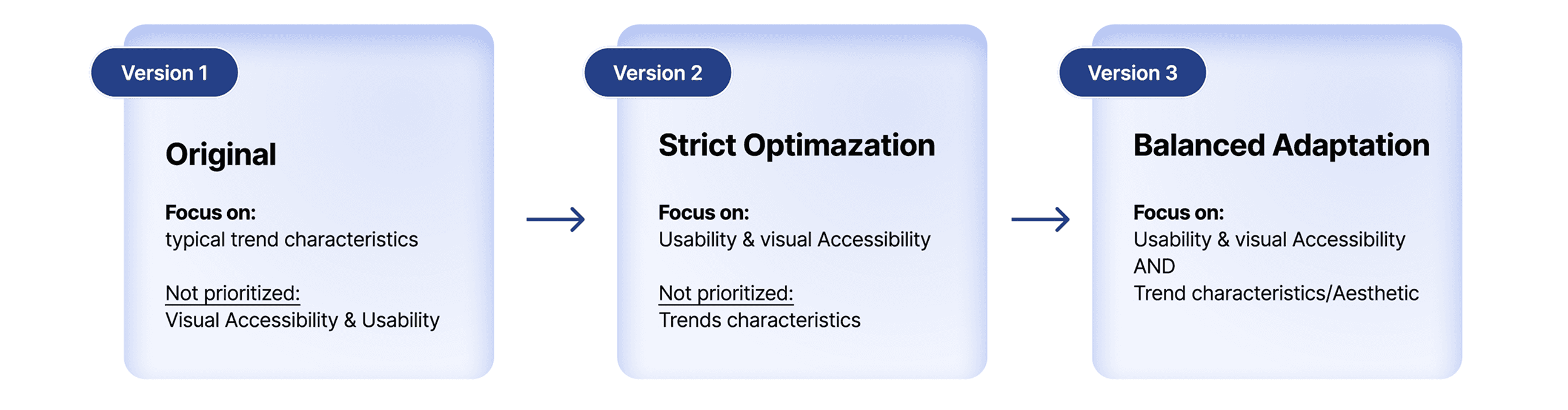
Comparing these variations makes it possible to evaluate where accessibility improvements begin to affect aesthetic perception, usability, and user satisfaction.
Hypotheses:
H1 Balanced Adapted Versions (V3) are perceived as more aesthetically appealing than Strictly Optimized Versions (V2), but slightly less than the Original (V1)."
H2 Balanced Adapted Versions (V3) achieve the highest user experience scores, while strictly optimized versions achieve the lowest score (V2).
H3 Strict adaptations (V2) receive the lowest satisfaction ratings, while balanced adaptations (V3) achieve the highest satisfaction ratings.
Target group & focus
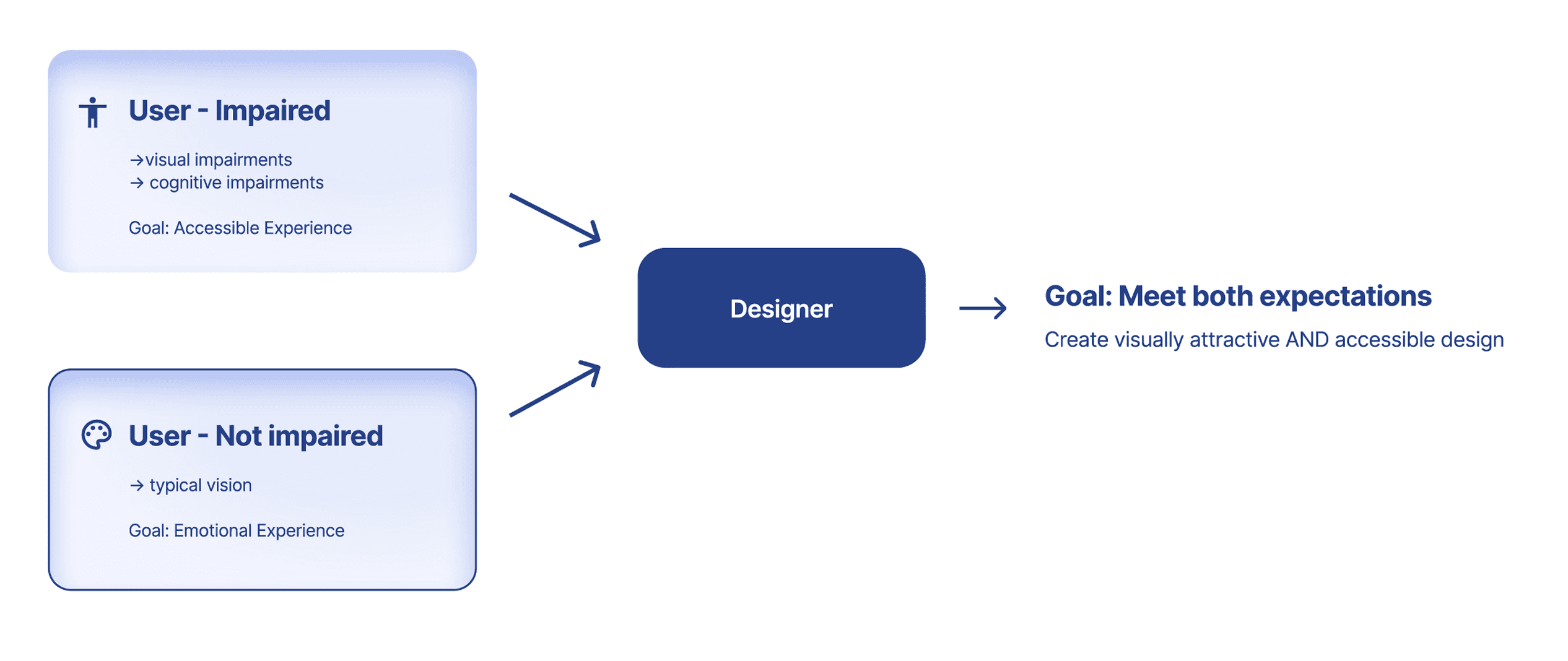
This study considered two potential user groups:
people with visual or cognitive impairments,
and users with typical vision.
The evaluation focuses on users with typical vision to understand how accessibility-driven design changes affect perceived aesthetics under standard viewing conditions.
Accessibility needs of users with impairments were taken into account as design constraints during the creation of the variations, rather than being tested directly. This allows the study to isolate the effect of accessibility adaptations on visual perception and user experience.
Design Validation Criteria
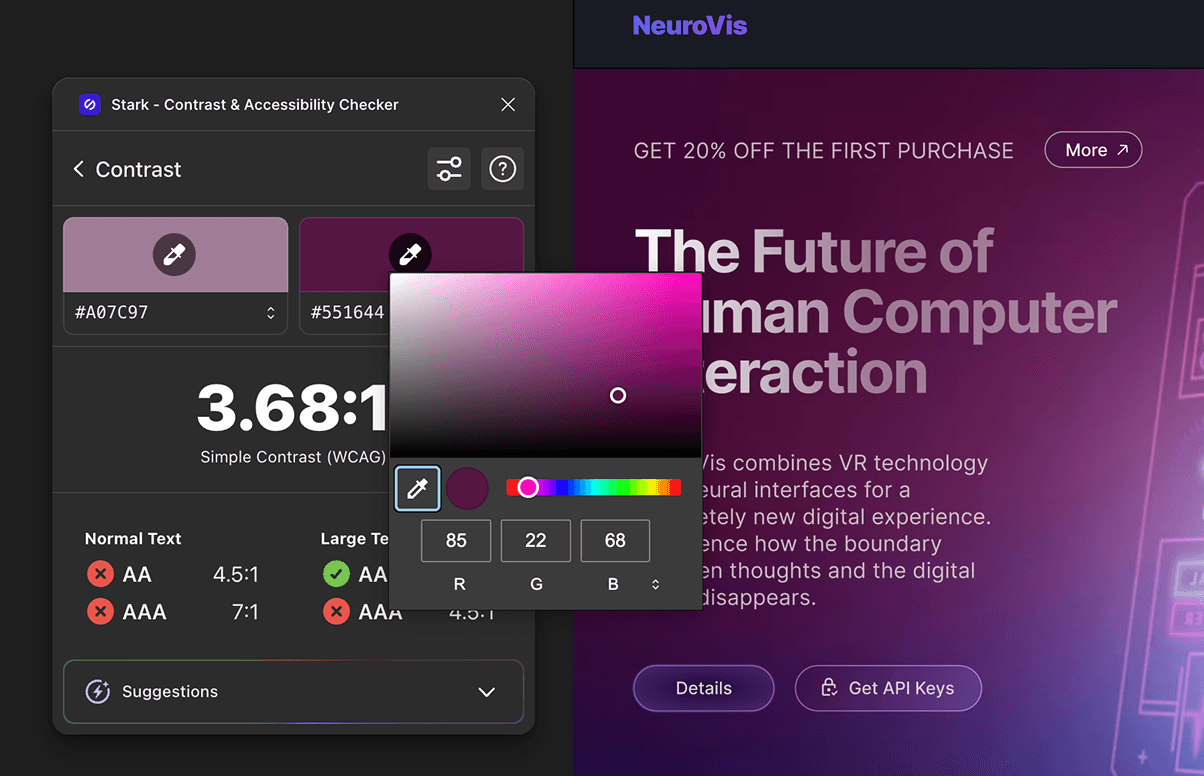
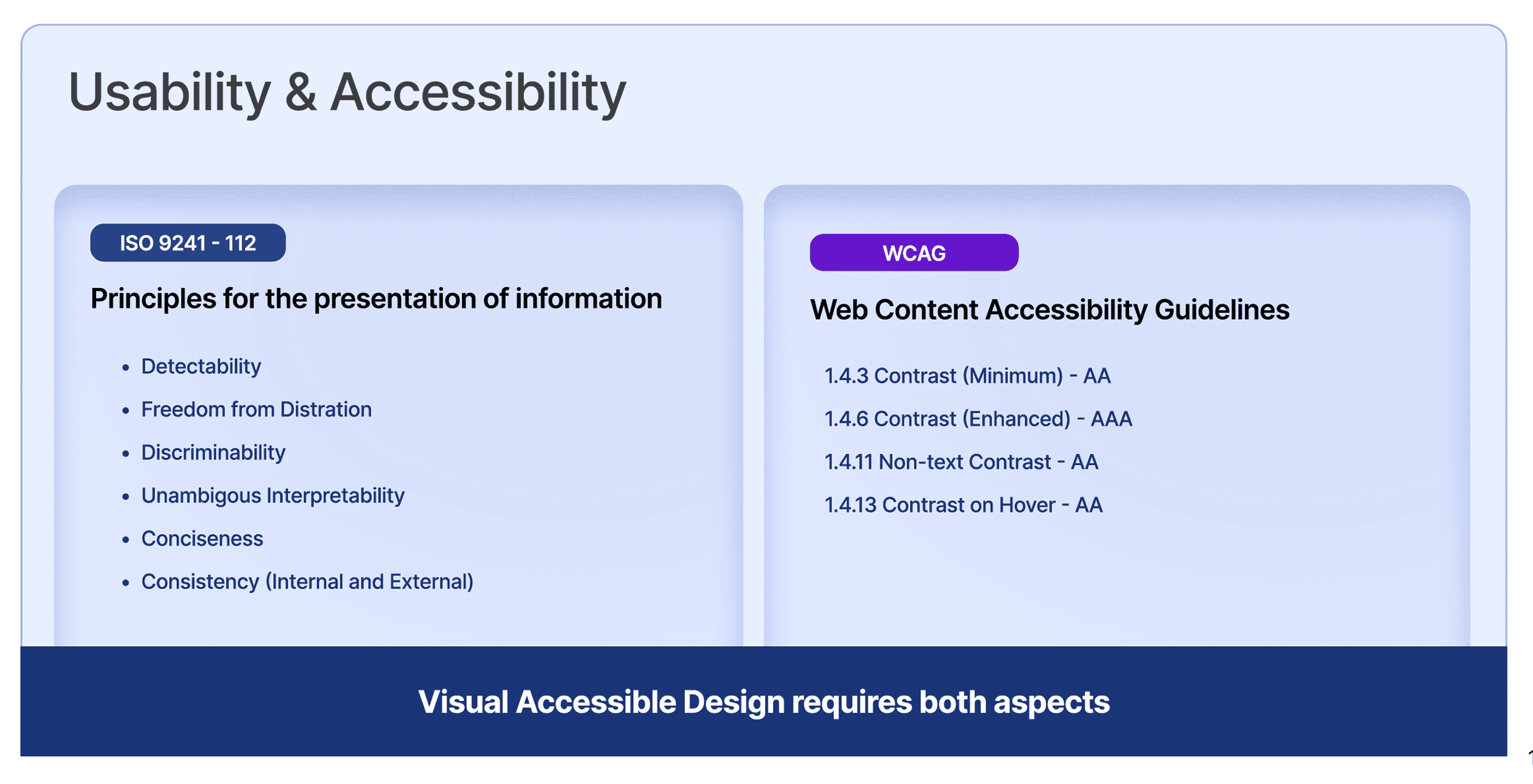
To ensure accessible design outcomes, each variation was evaluated using WCAG contrast requirements as a primary reference for visual accessibility, combined with established usability principles for information design.
WCAG contrast was checked using a color picker tool. Usability principles were applied as design guidelines throughout the iteration process. In addition, feedback from professional designers was used to validate the overall design quality and coherence.
The table below summarizes the evaluation criteria used across the design variations.:
Design Process
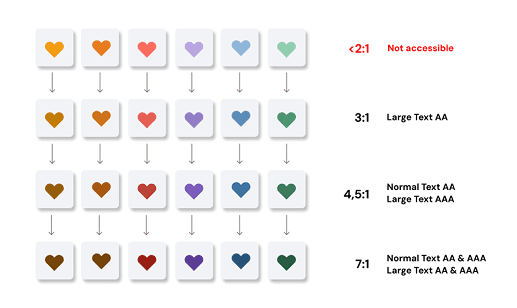
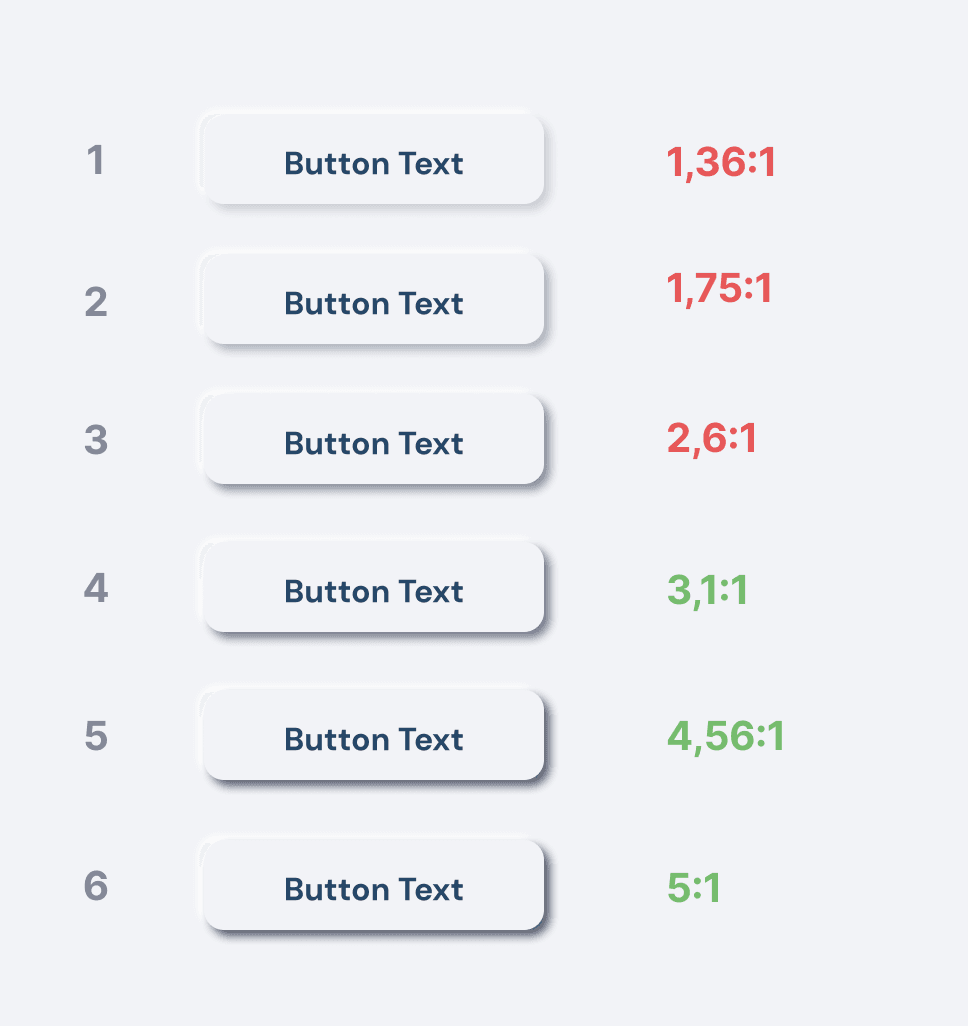
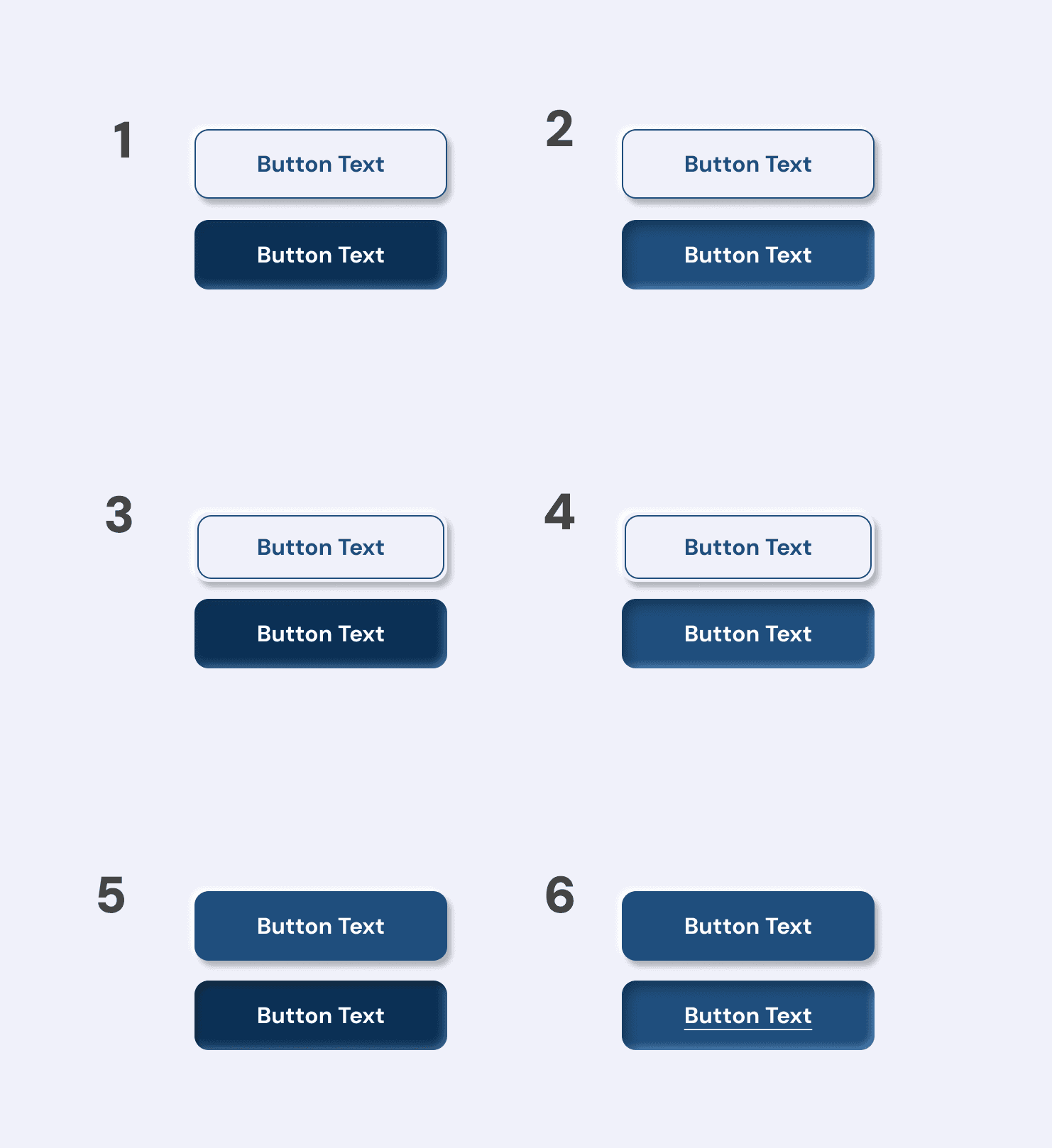
First, the relationship between design trend characteristics and WCAG contrast requirements was explored through visual variations to gain an initial understanding of how contrast influences the visual expression of each trend.
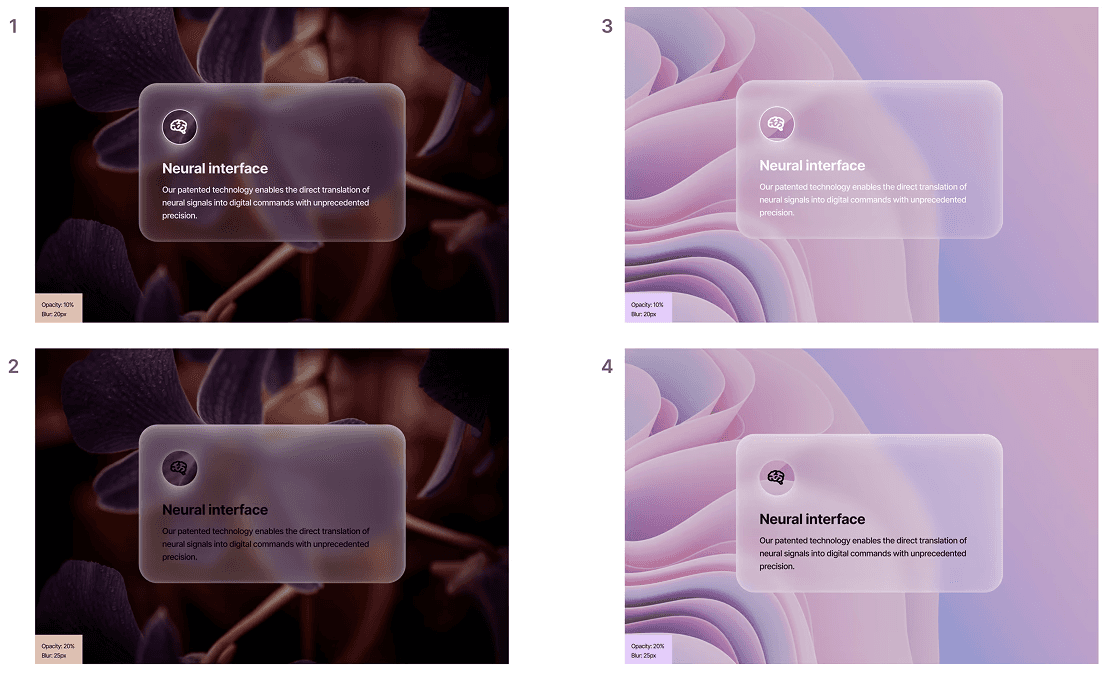
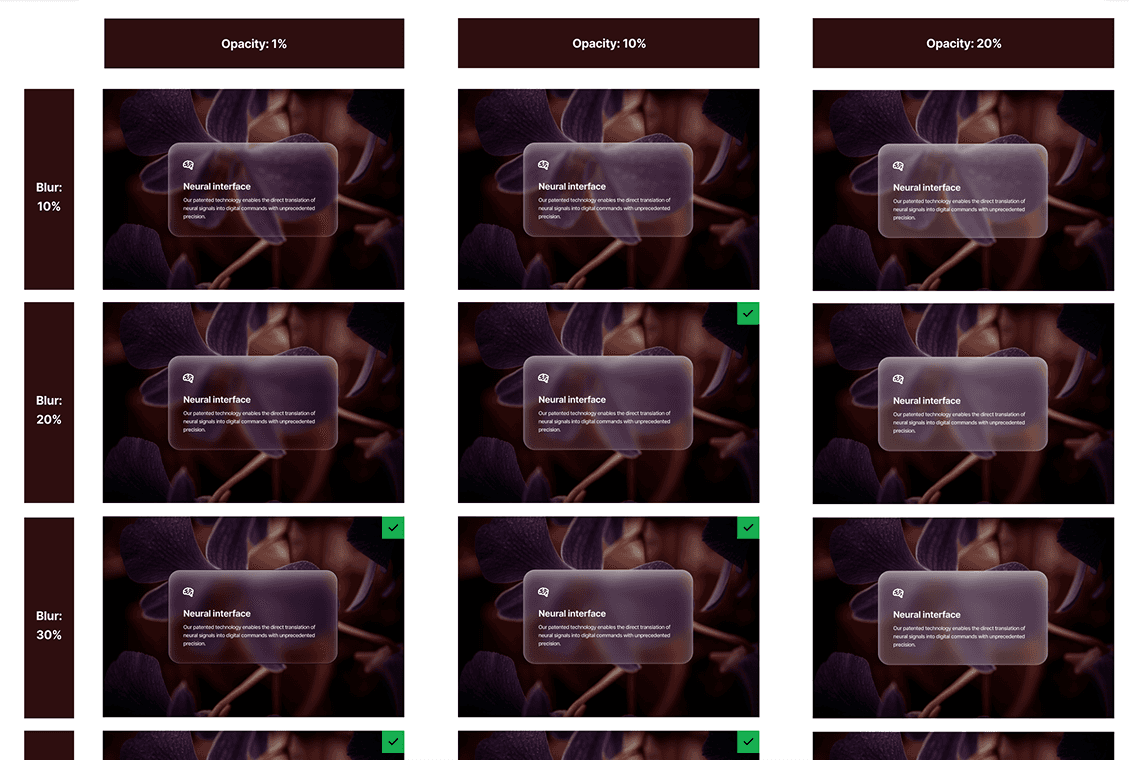
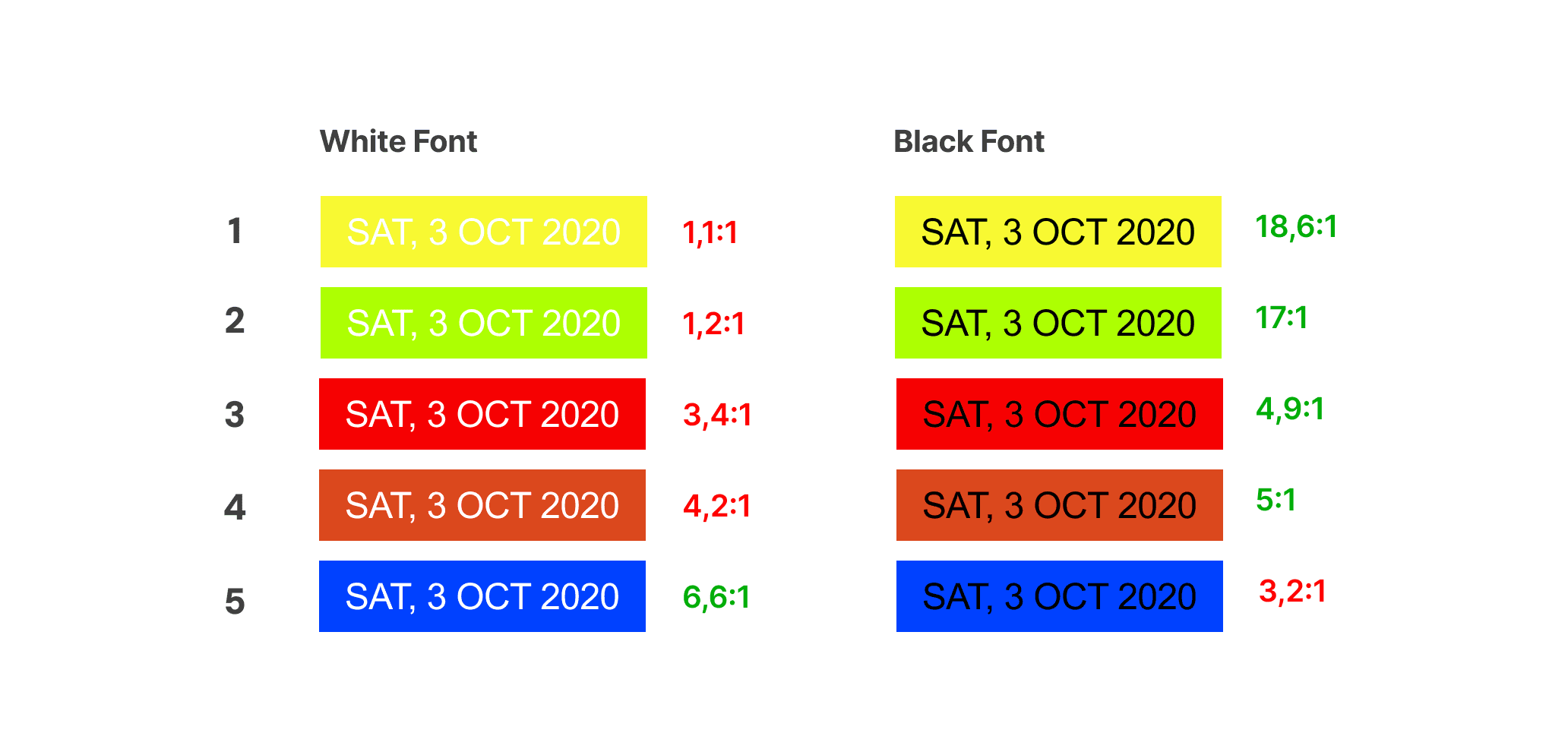
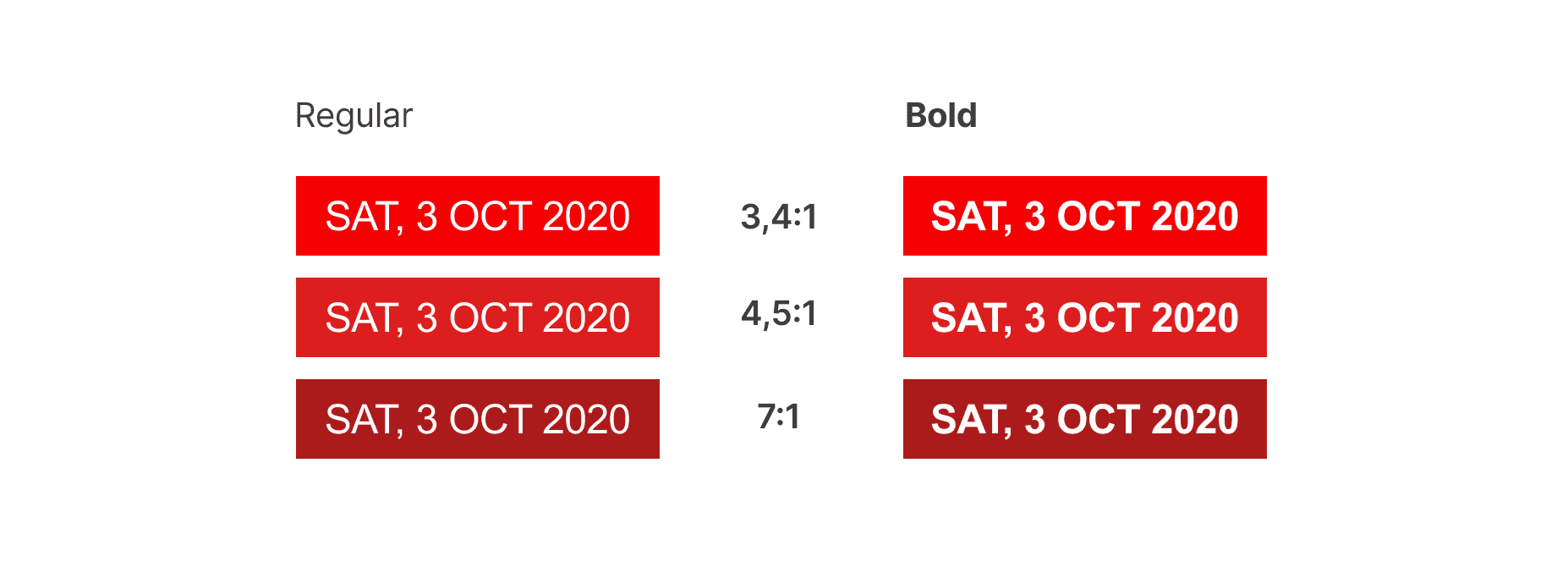
Creating original designs (V1) & strict accessibility optimization (V2)
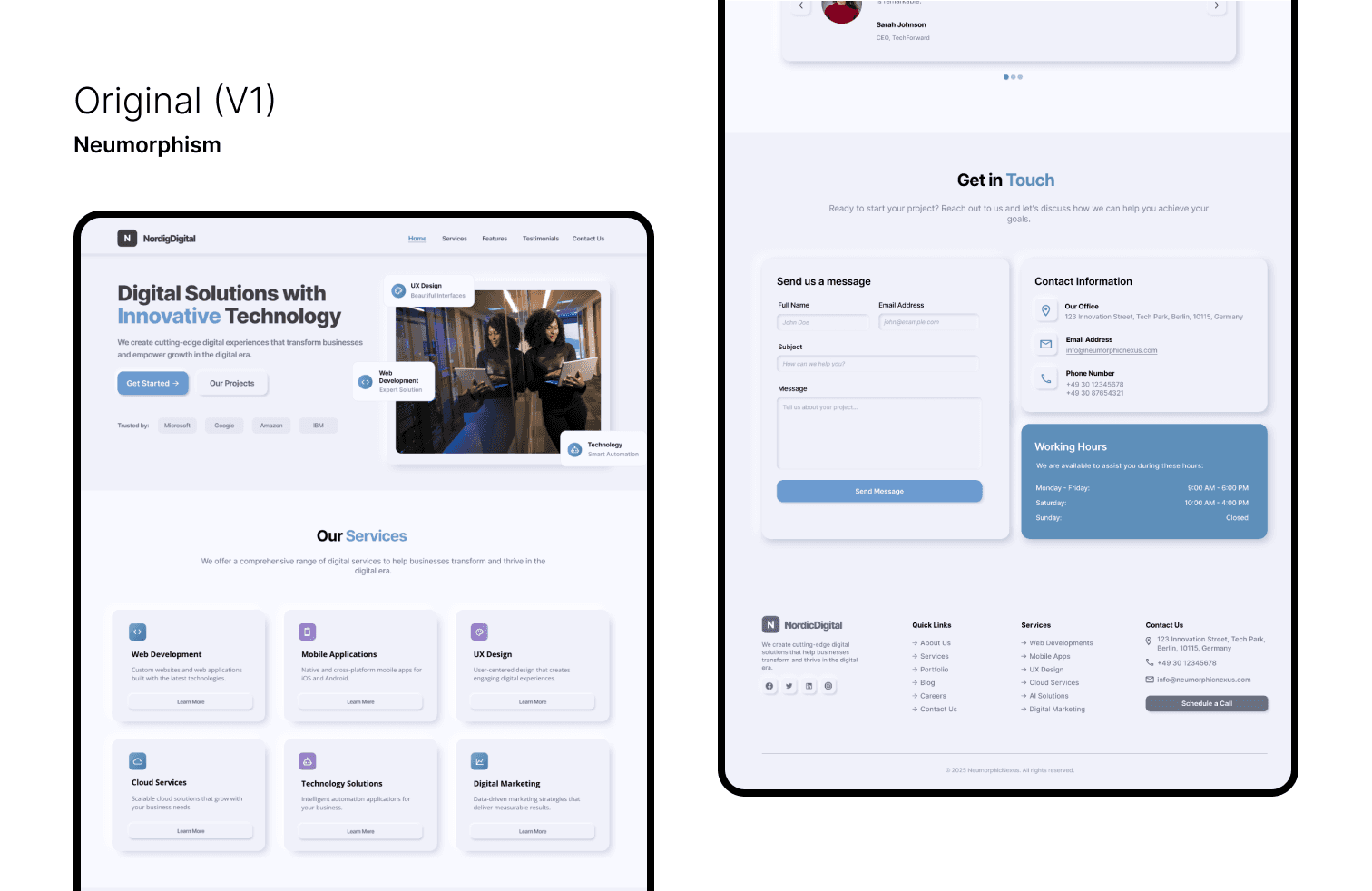
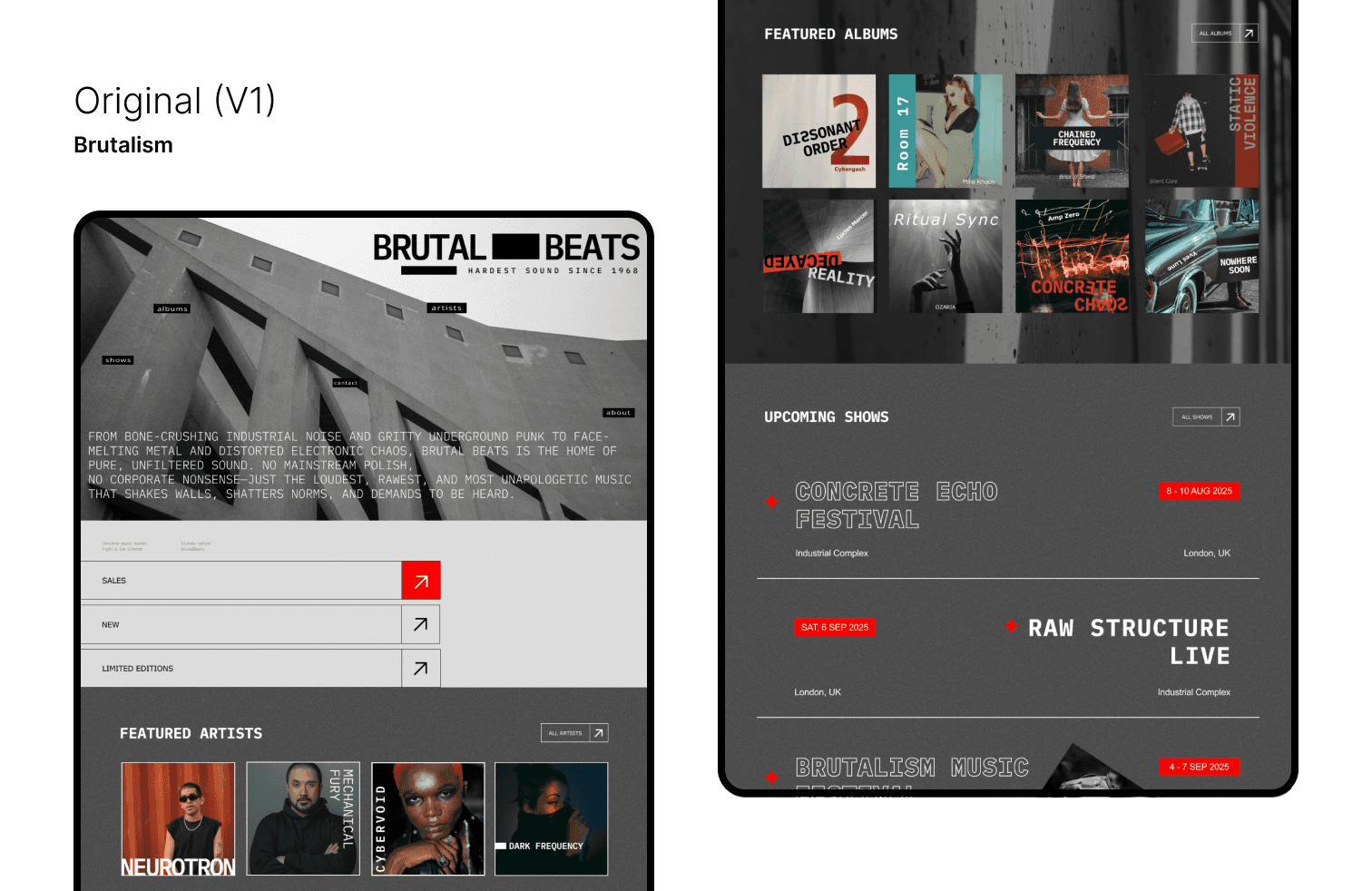
V1 Three baseline website designs were created to represent each design trend in its original visual style.
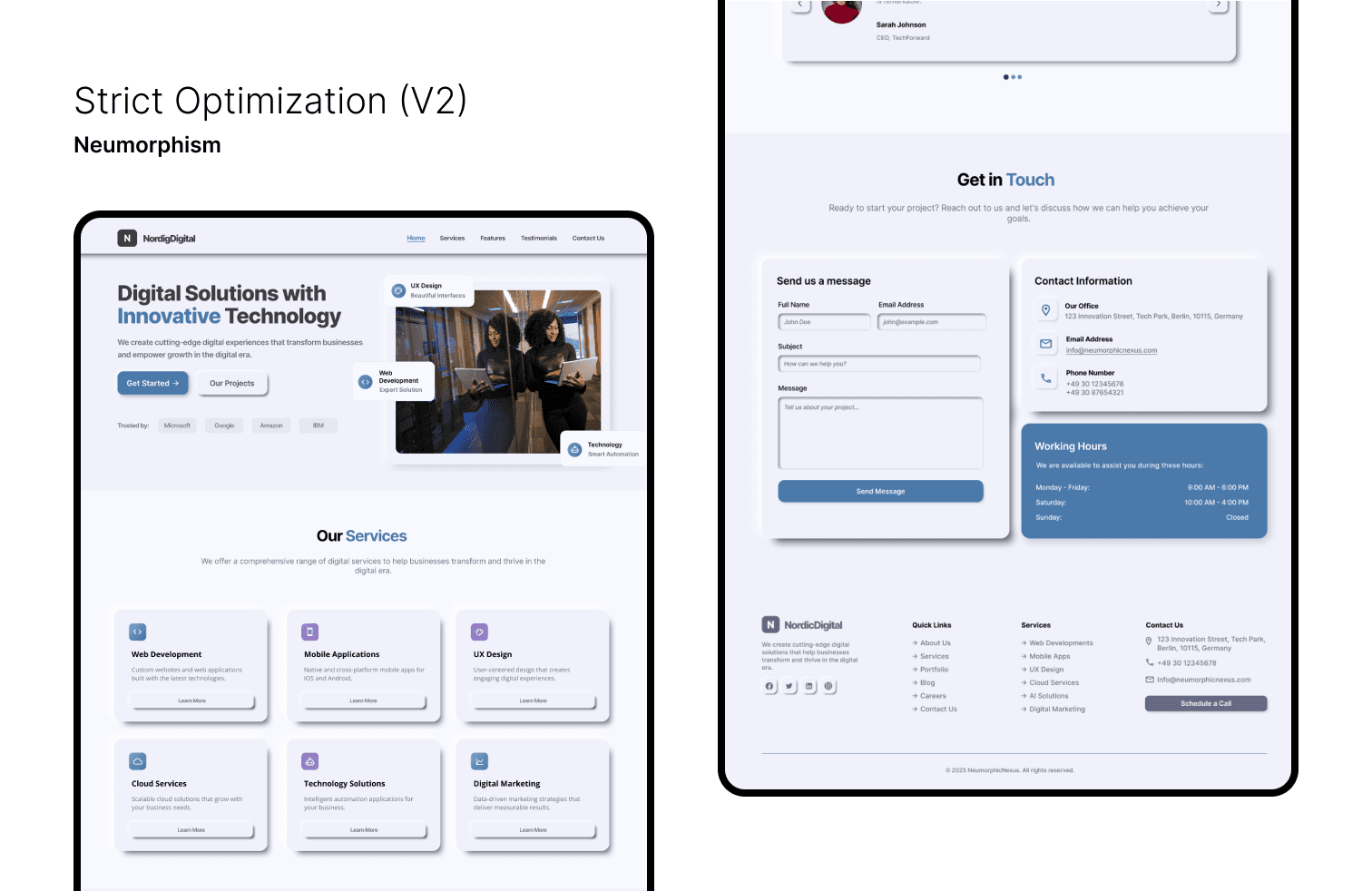
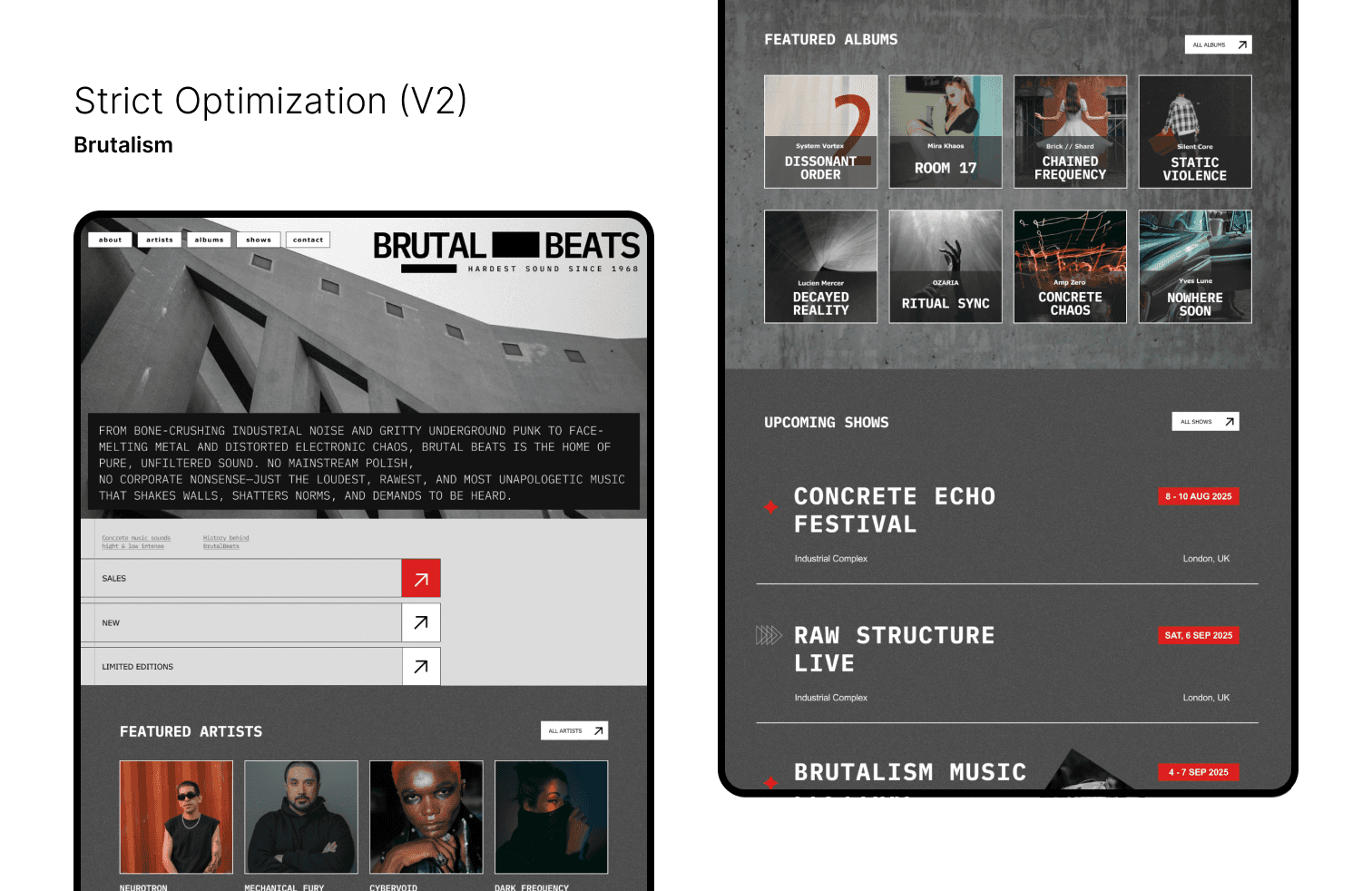
V2 Each website was then strictly optimized to meet contrast and usability guidelines, improving accessibility while keeping the content unchanged.
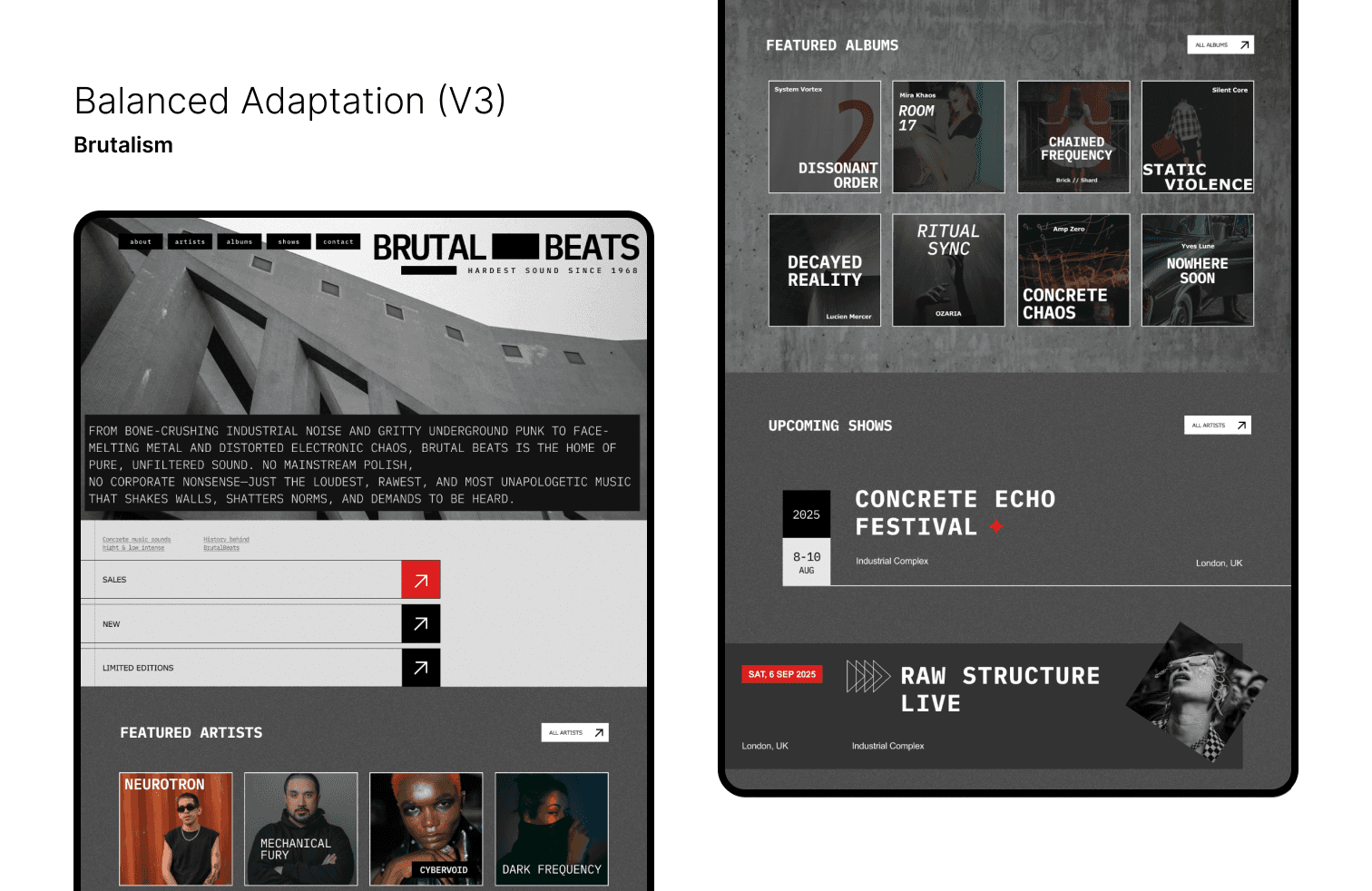
Making design decisions for balanced adaptations (V3)
The following shows one representative example per design trend to illustrate the decision-making process behind the balanced adaptations (V3), where accessibility requirements and visual aesthetics were intentionally balanced.
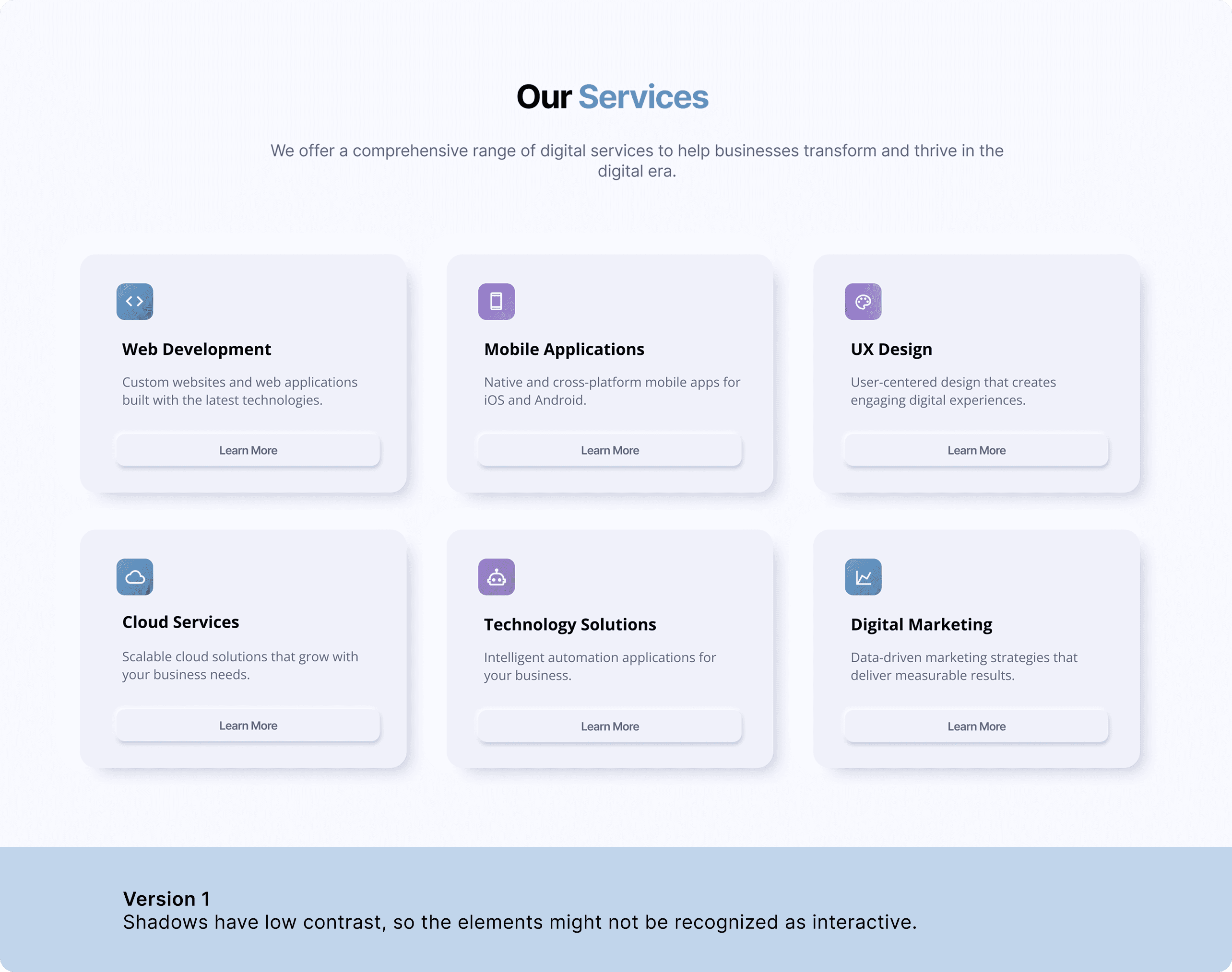
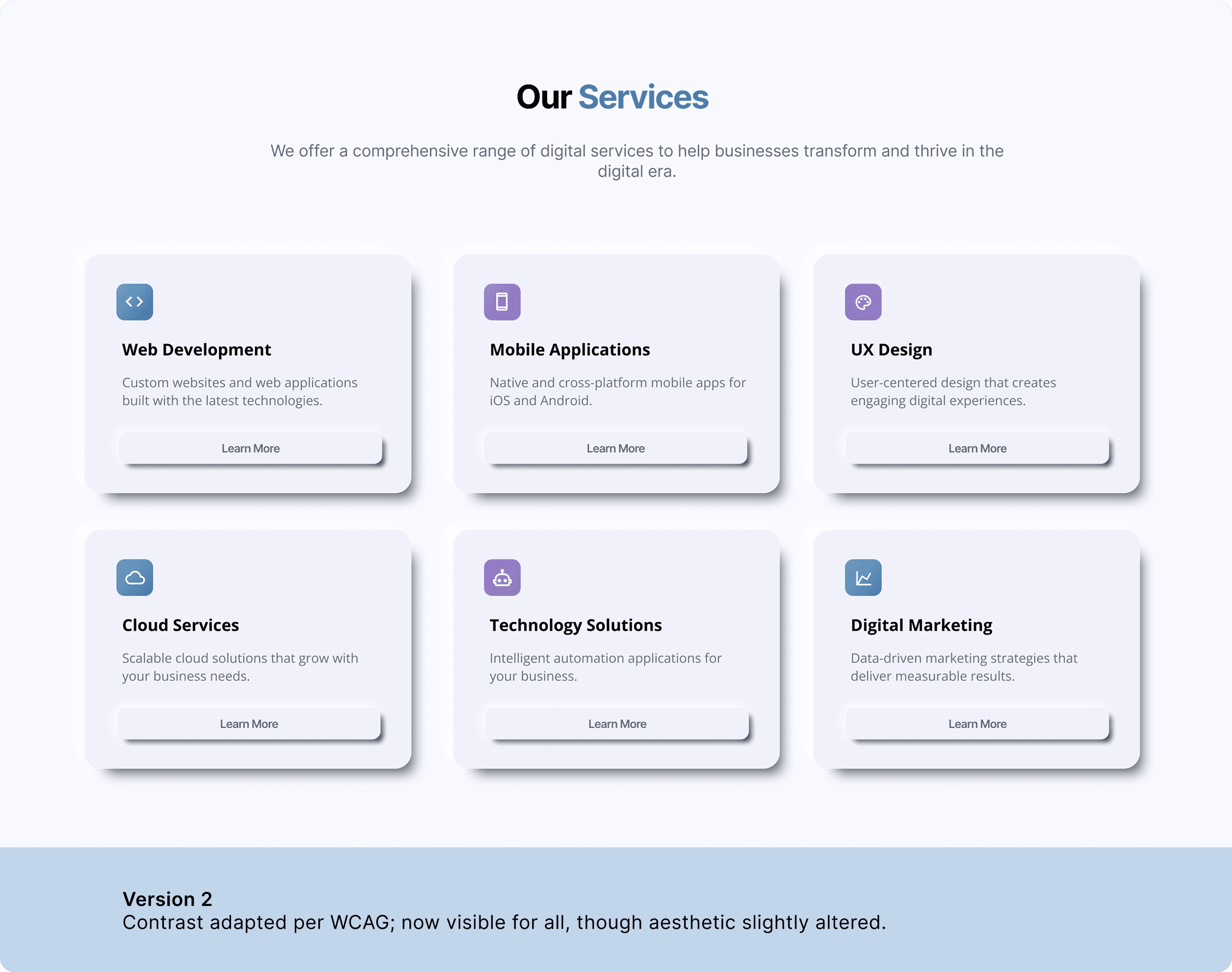
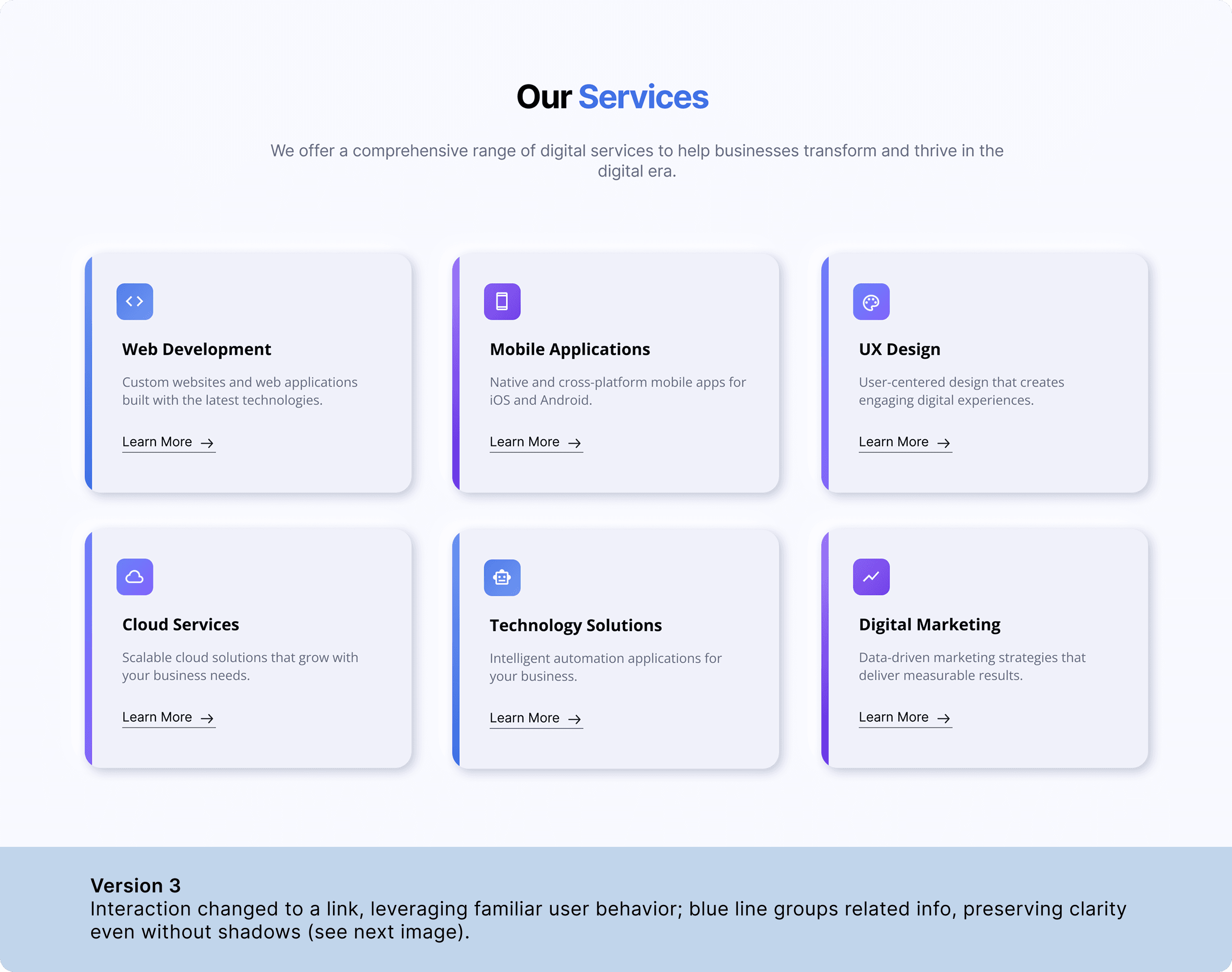
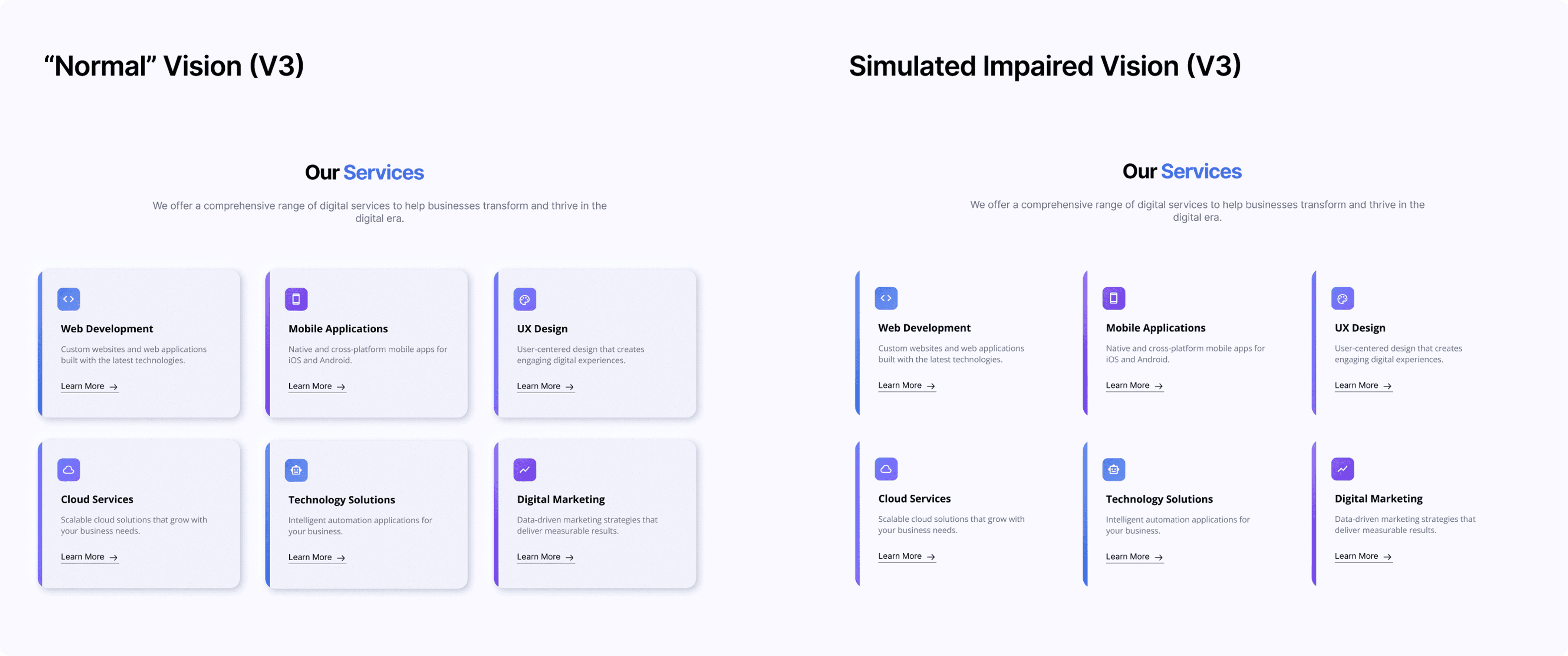
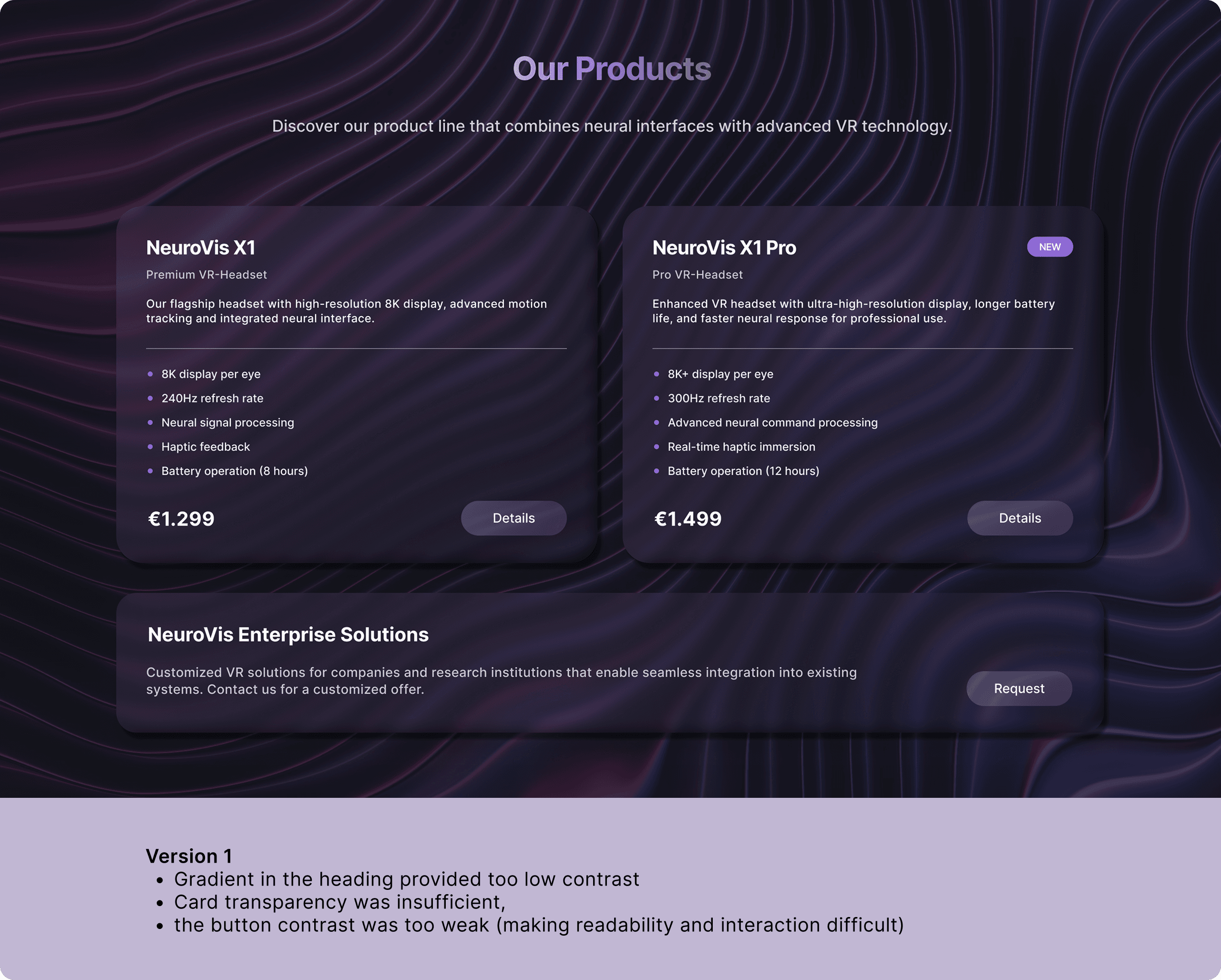
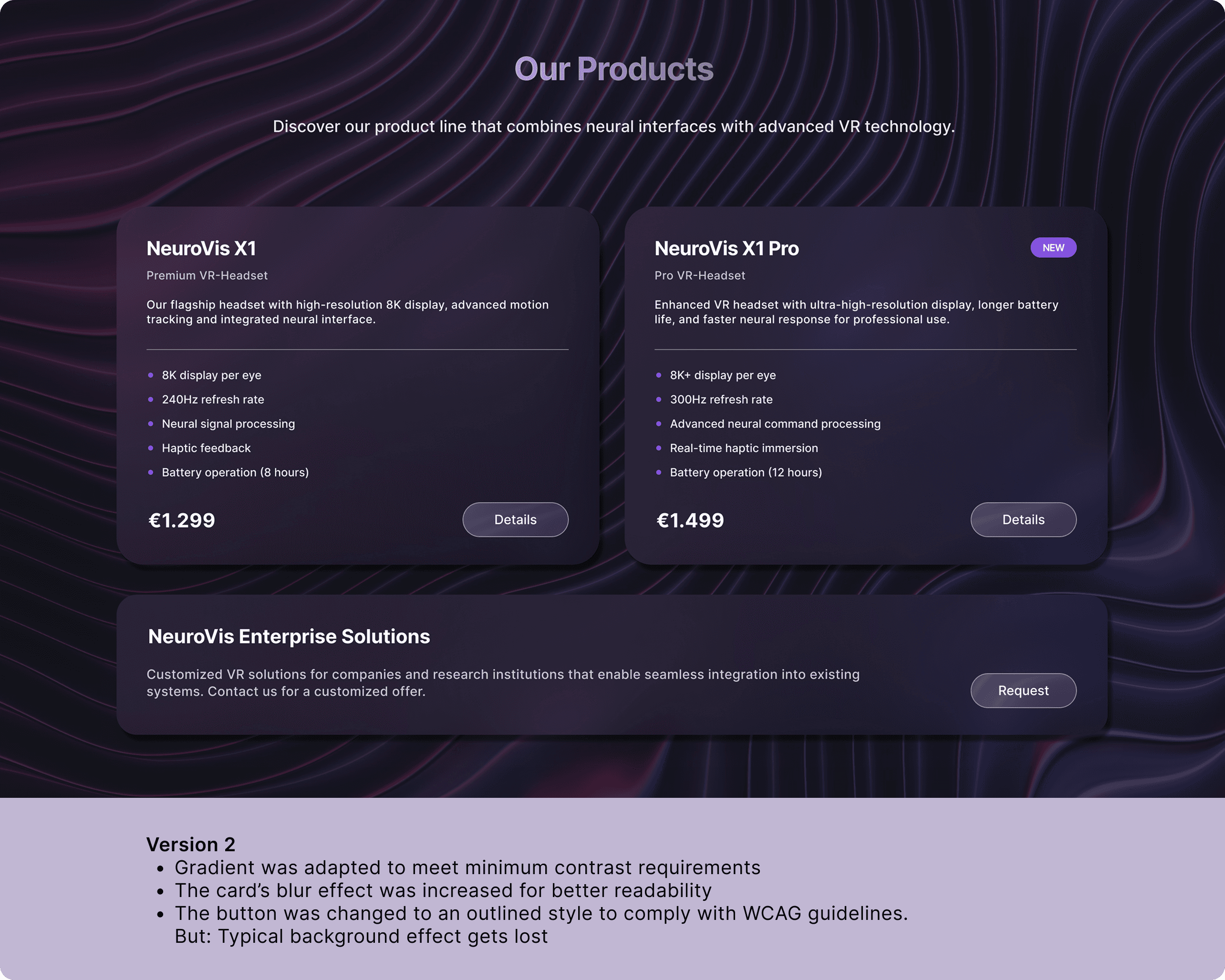
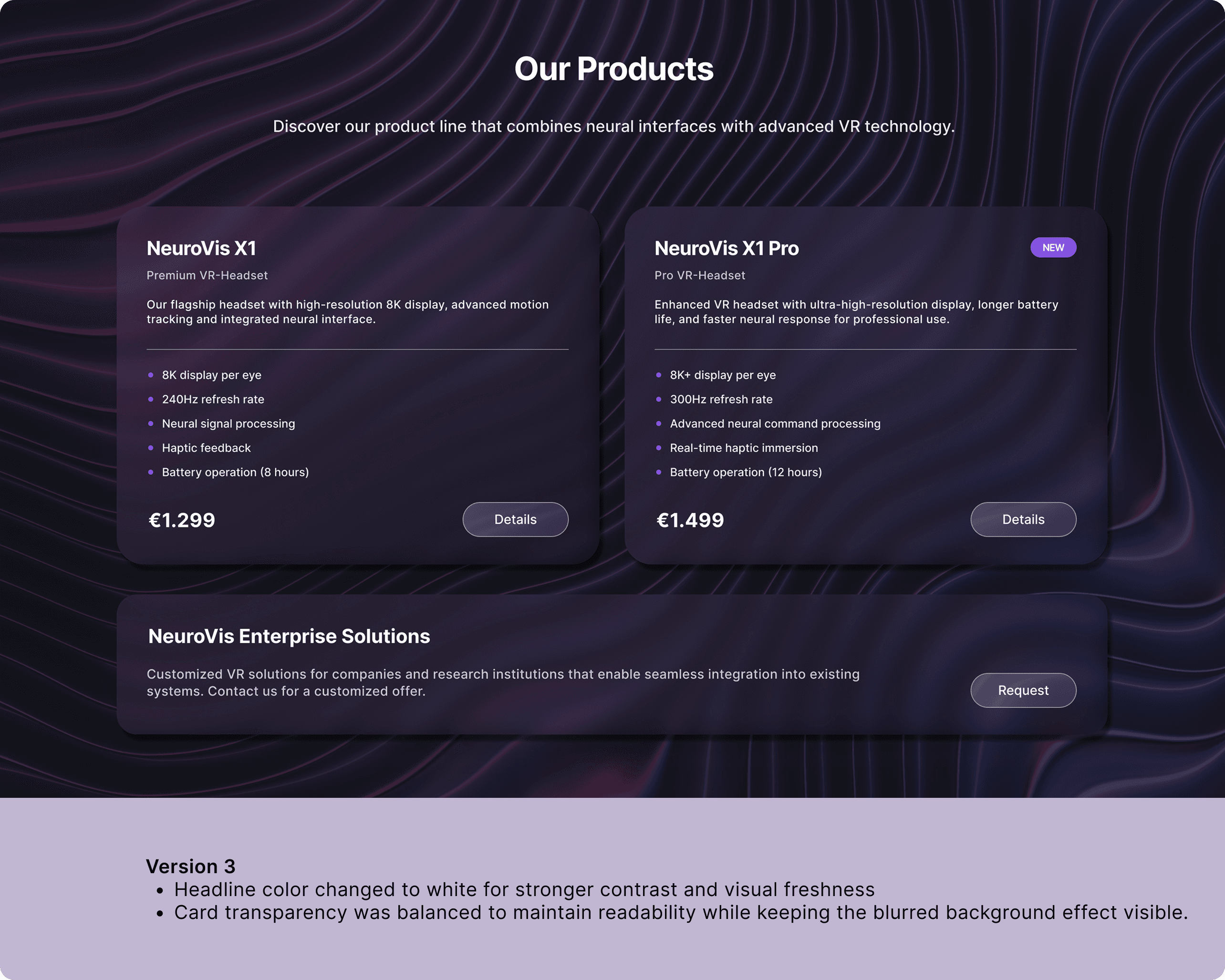
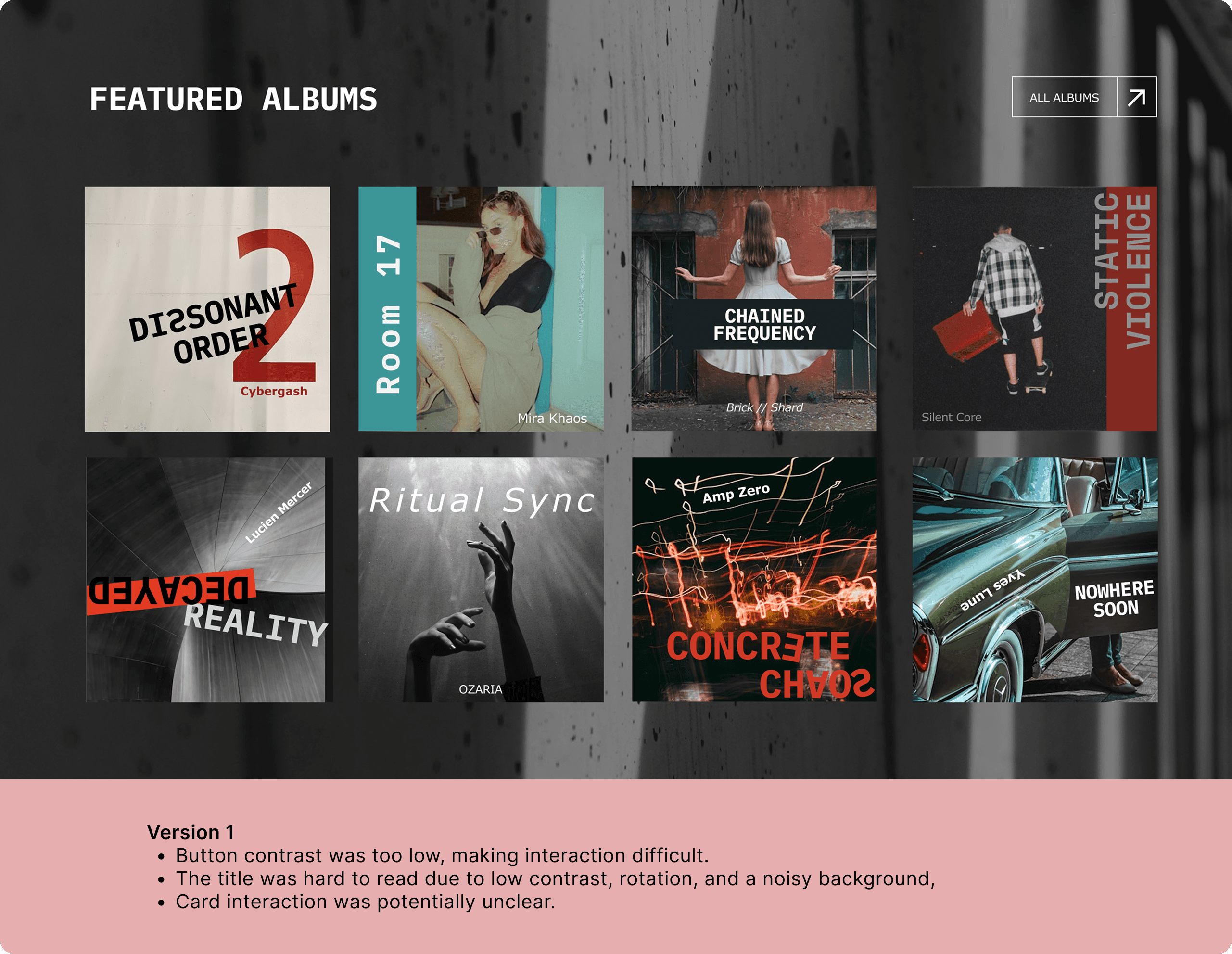
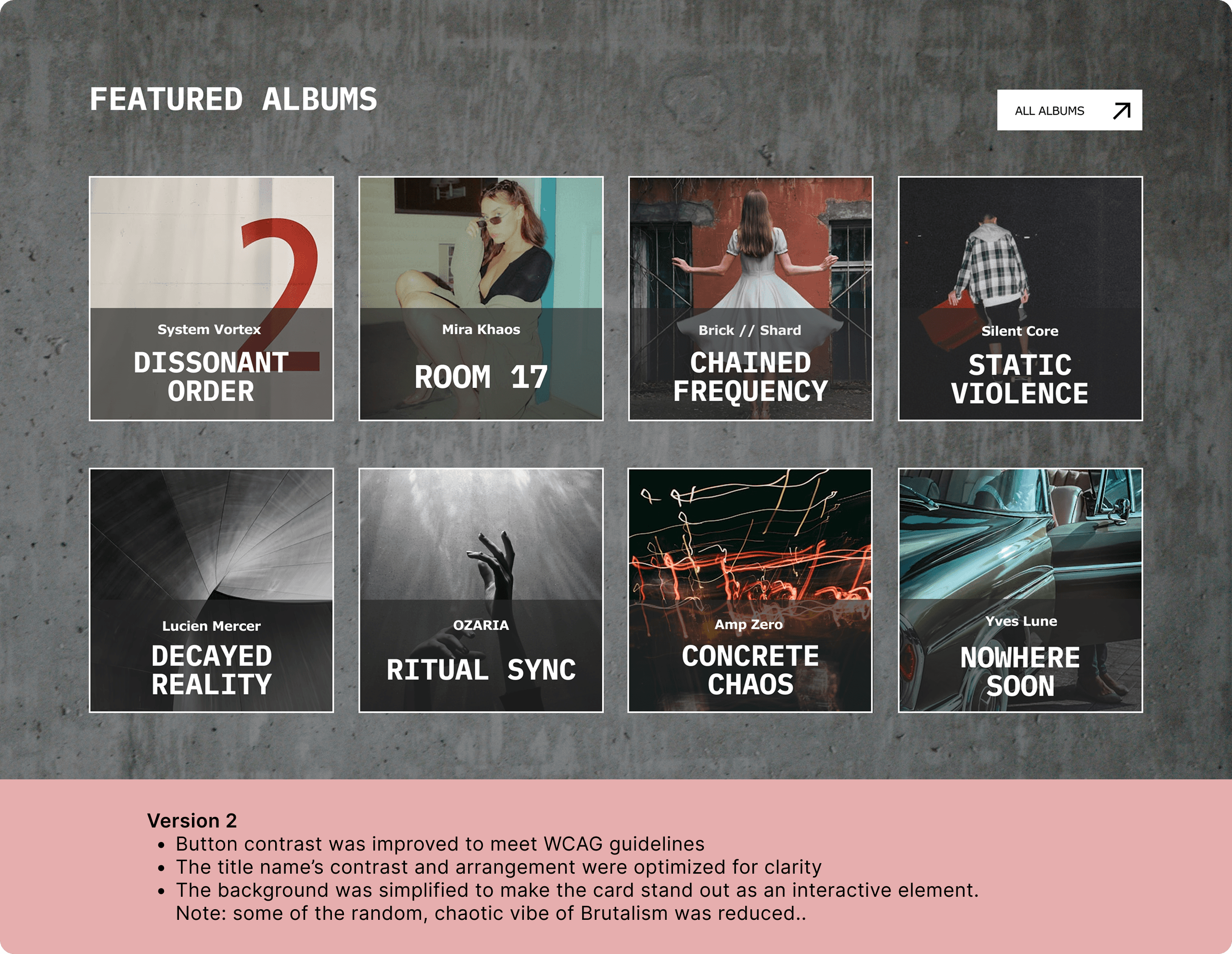
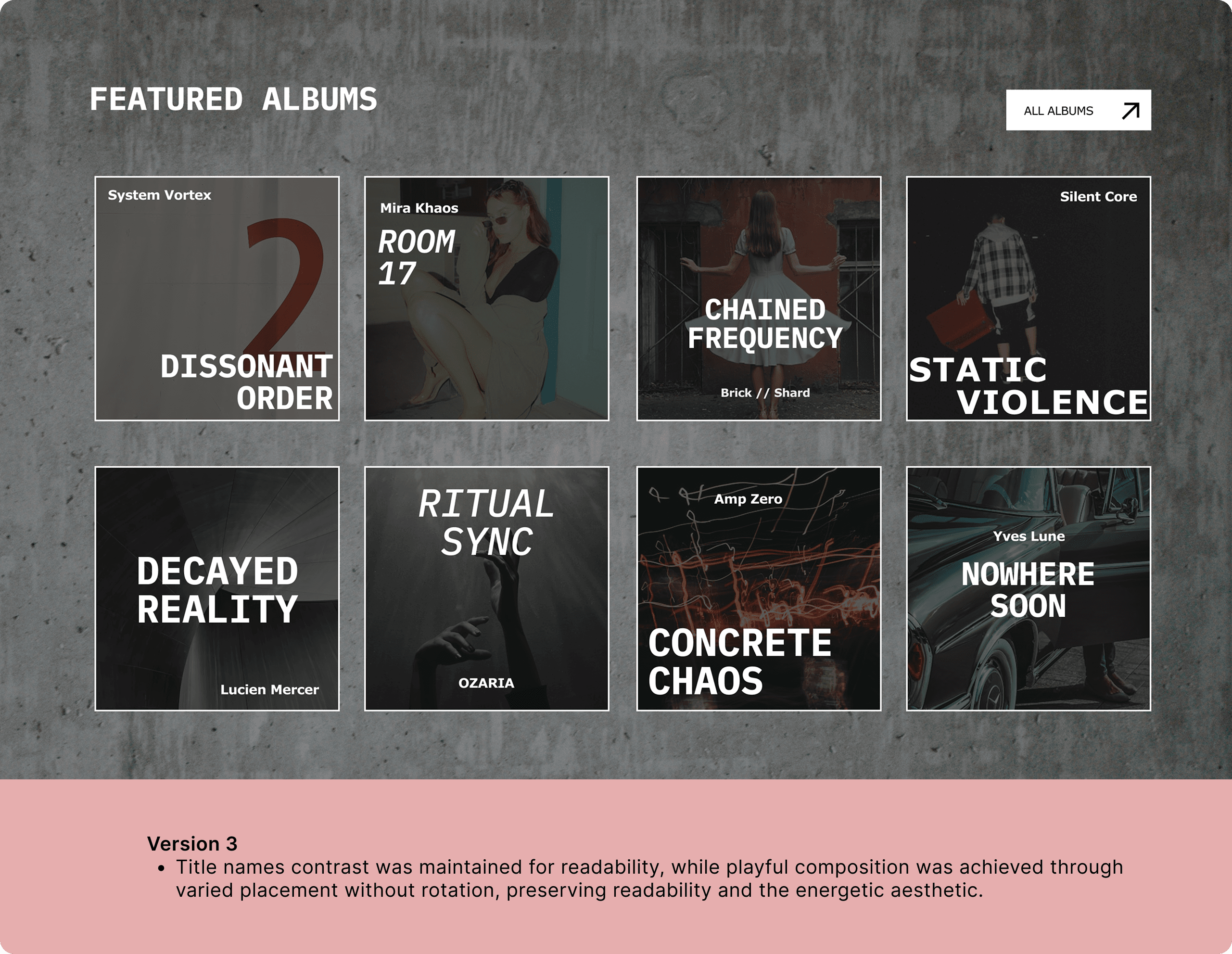
Full website designs: 3 trends × V1–V3
Feedback from Professional Designer
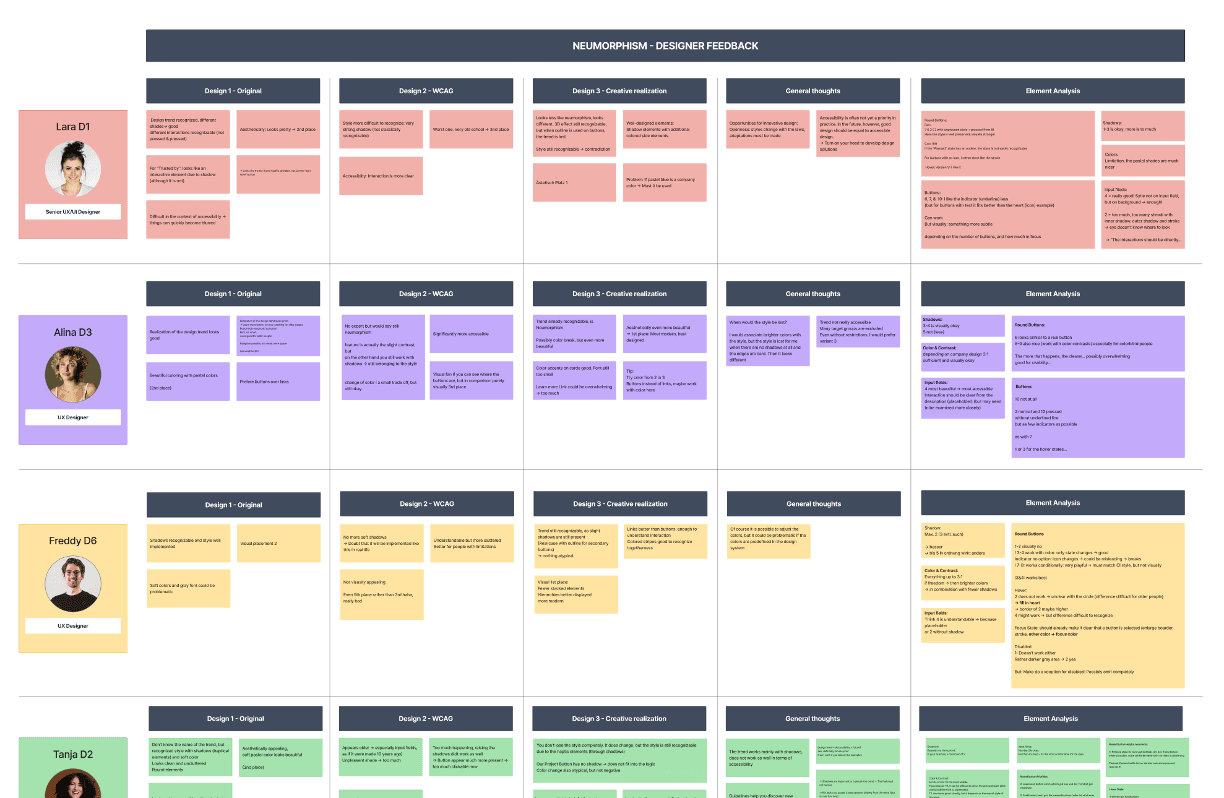
Each design trend was reviewed by 7 professional designers to validate the visual direction and evaluate the accessibility adaptations.
Original designs were validated for trend fidelity.
Accessibility adaptations were discussed in terms of clarity, usability, and visual coherence.
Based on these insights, selected design elements were refined and adjusted where necessary.
Study Design
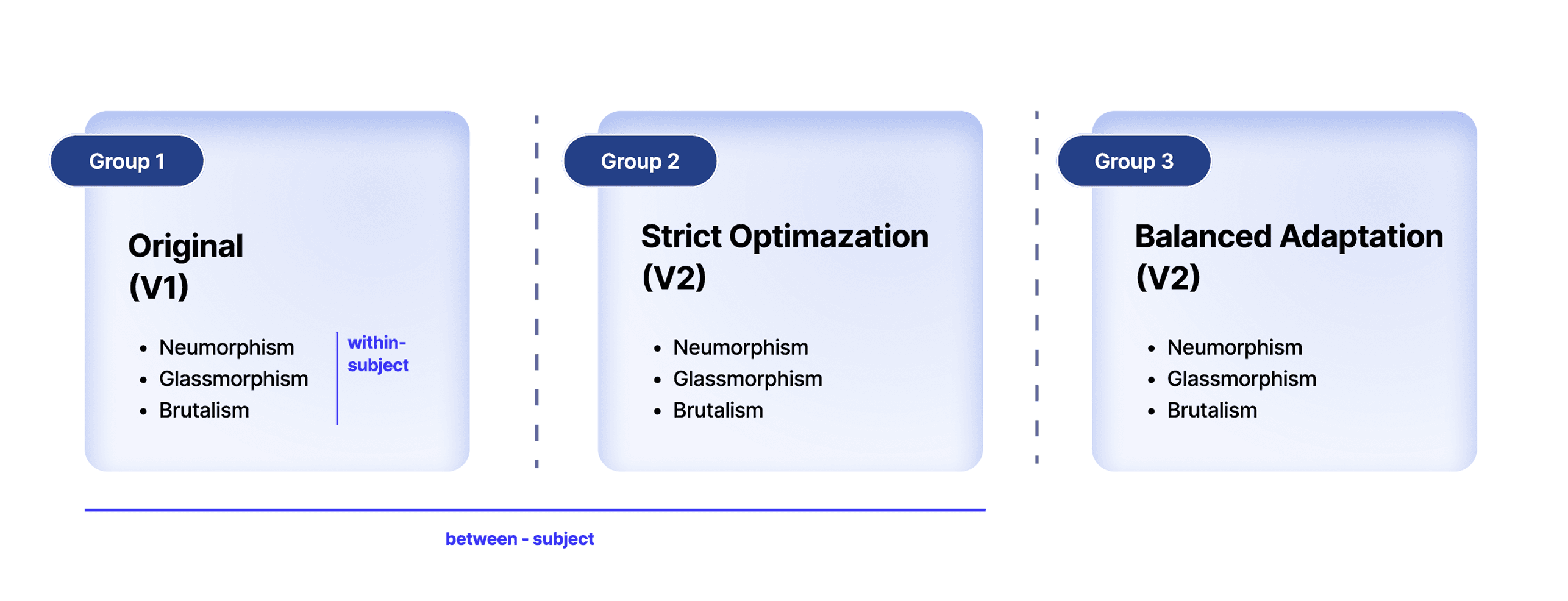
30 Participants in total
Split-Plot Design
Conducted remotely (with MS Teams and AutoDesk tool)
IV1: Design Trend (Neumorphism, Glassmorphism, Brutalism)
IV2: Design Version (V1, V2, V3)
DV: Aesthetic Perception, User Experience, User Satisfaction
3*3 factorial design = 9 treatments
Testing
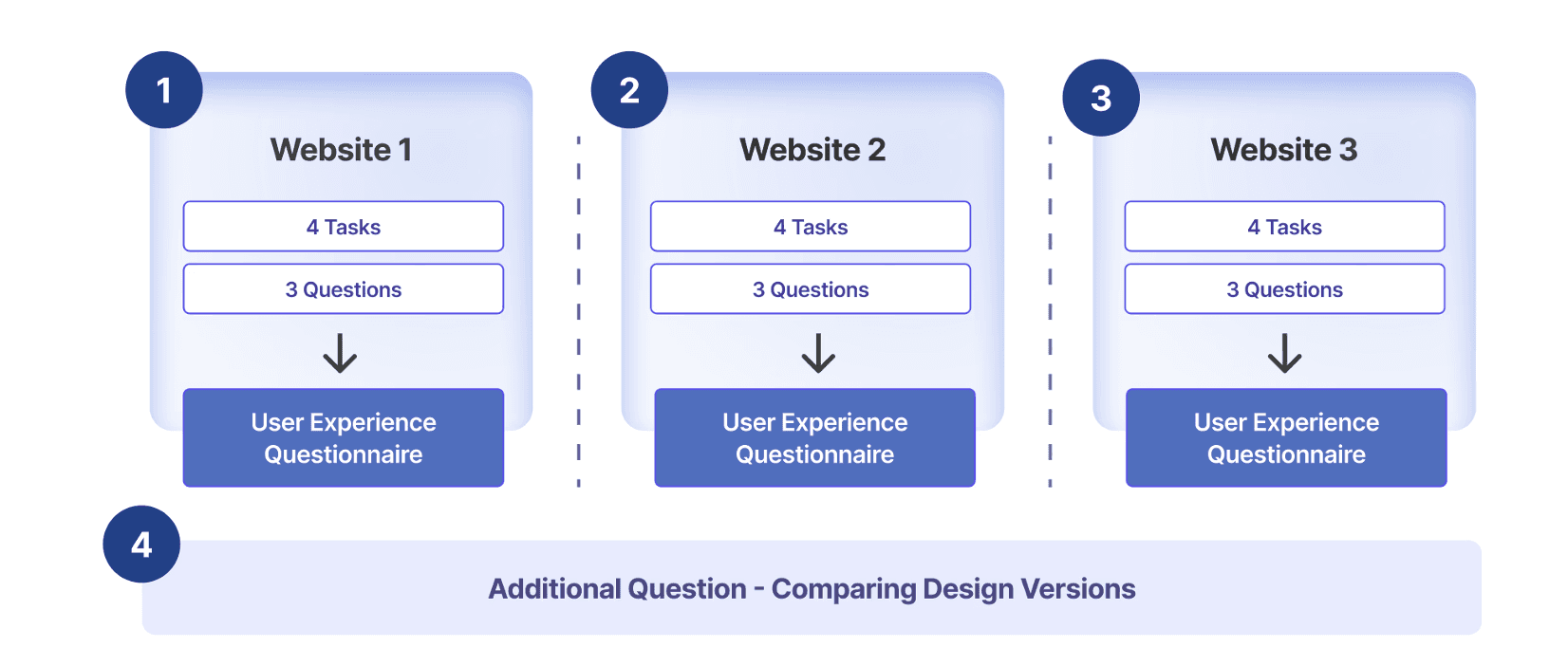
Every participant tested one Version of each design trend. The testing took approximately 60mins per participant.
Testing Procedure:
Evaluation Overview
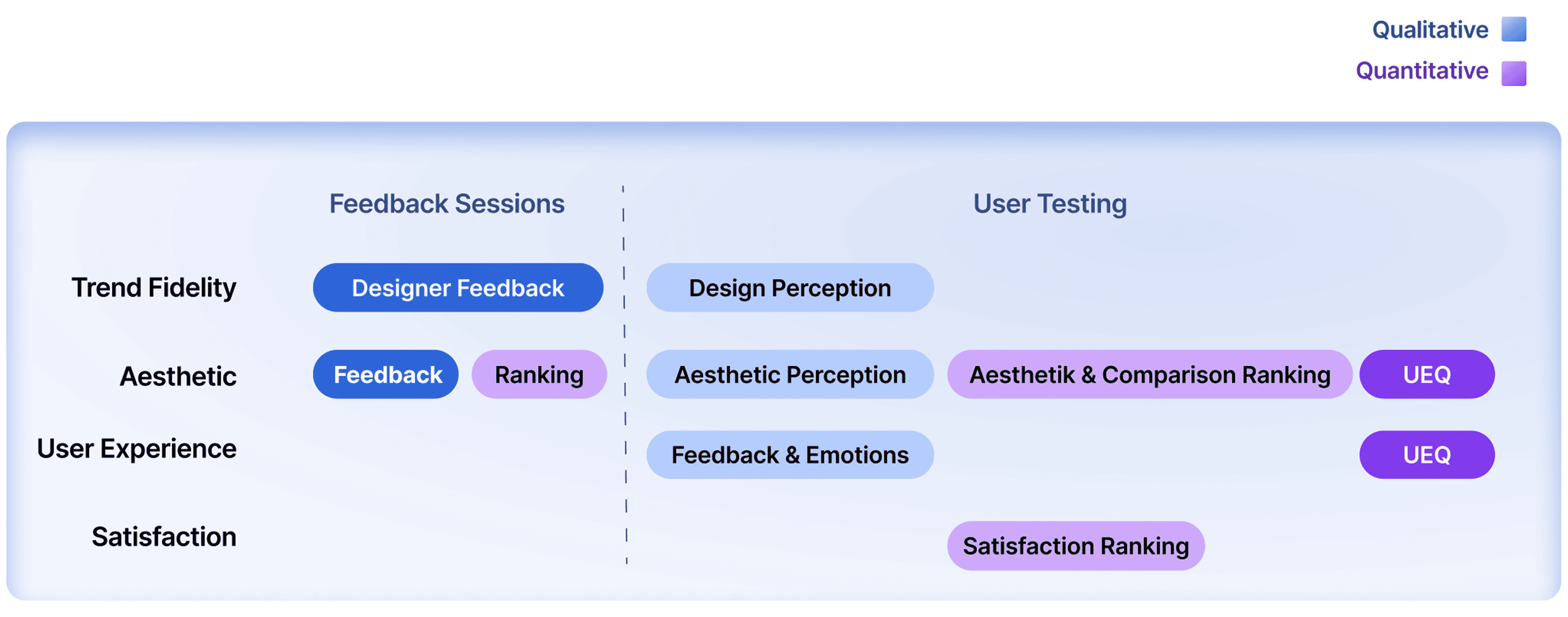
This overview shows how each evaluation criterion was addressed and measured across the feedback sessions and the user testing phase.
Results
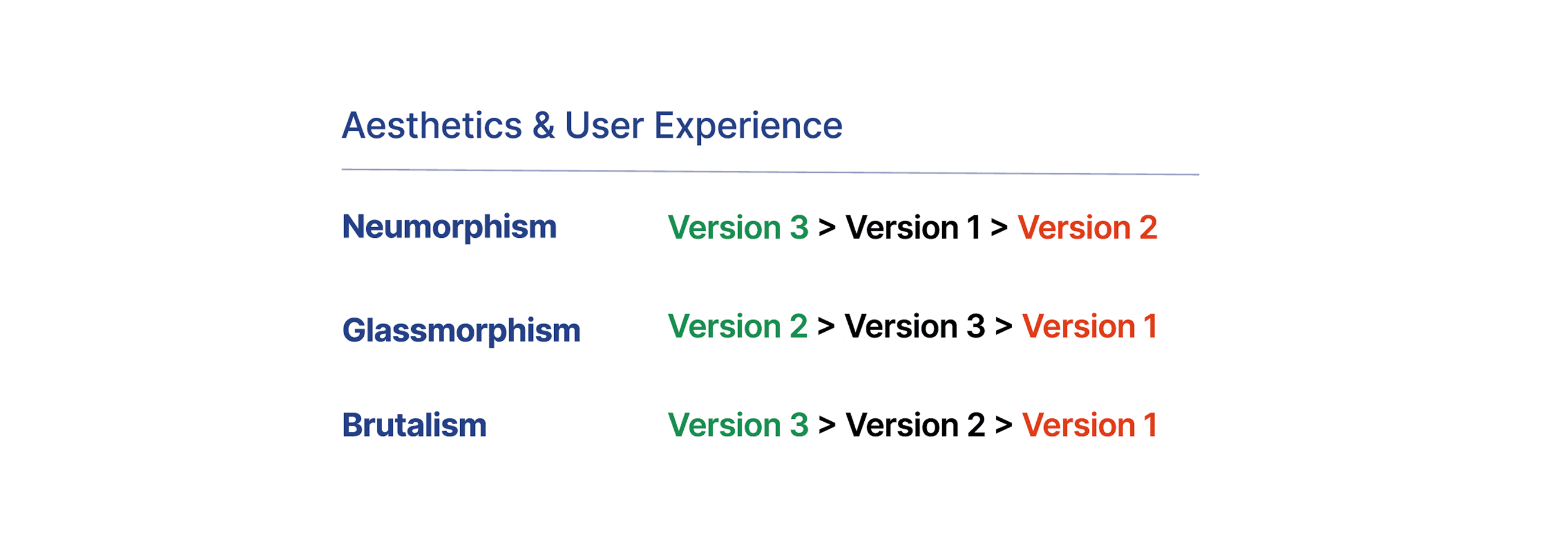
The following summary combines the results across user experience and perceived aesthetics. User satisfaction remained consistently high across all versions, indicating that accessibility adaptations did not negatively affect overall satisfaction.
Key Insights:
Original designs (V1) did not rank highest in any trend
Strictly optimized versions (V2) outperformed the originals (V1) in two of the three trends.
Balanced adaptations (V3) achieved the strongest overall results
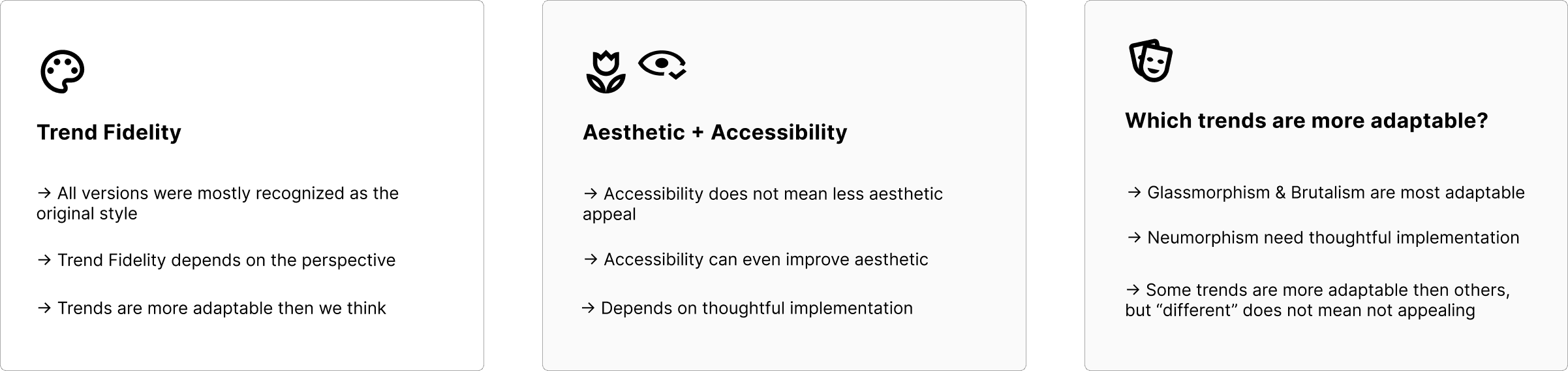
Learnings
Conclusion
This project demonstrates that accessibility and visual design trends do not have to be in conflict. Based on the exploration of multiple design trend examples, the results suggest that accessibility can enhance both usability and perceived aesthetics.
When approached thoughtfully, accessibility can strengthen creative possibilities and act as a driver for design innovation.
Embracing this perspective opens up opportunities to create digital experiences that work better for everyone.
Outlook
While this study focused on users with typical vision, future testing with a larger participant pool, including users with visual or cognitive impairments, could provide deeper insights and further validate how accessibility adaptations impact usability and perceived aesthetics.
Master’s Thesis Presentation & Public Talk
Thesis Defense
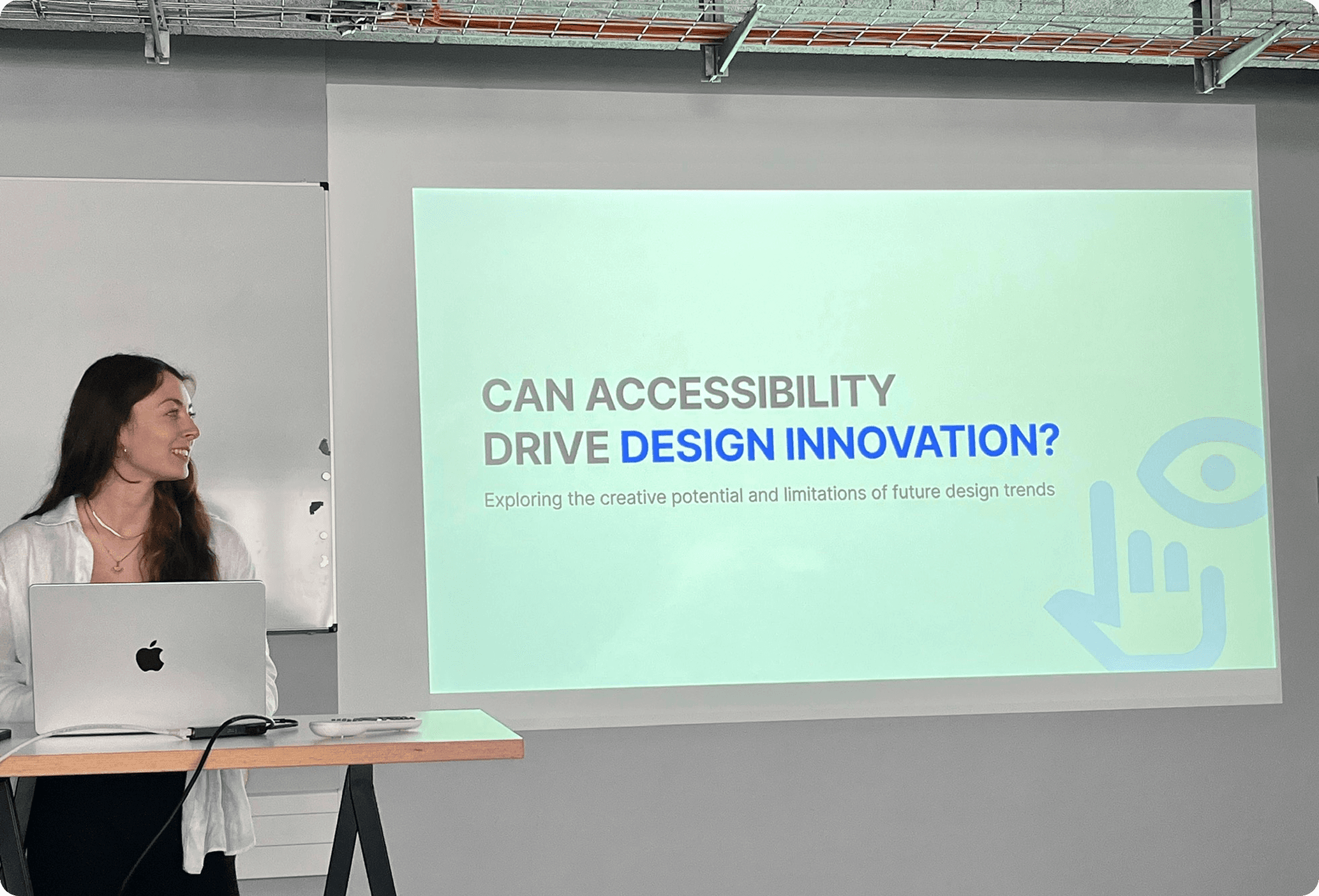
I presented and defended my master's thesis in front of professors and fellow students, discussing the research process, methodology, and main findings.
Presentation at World Usability Day 2025
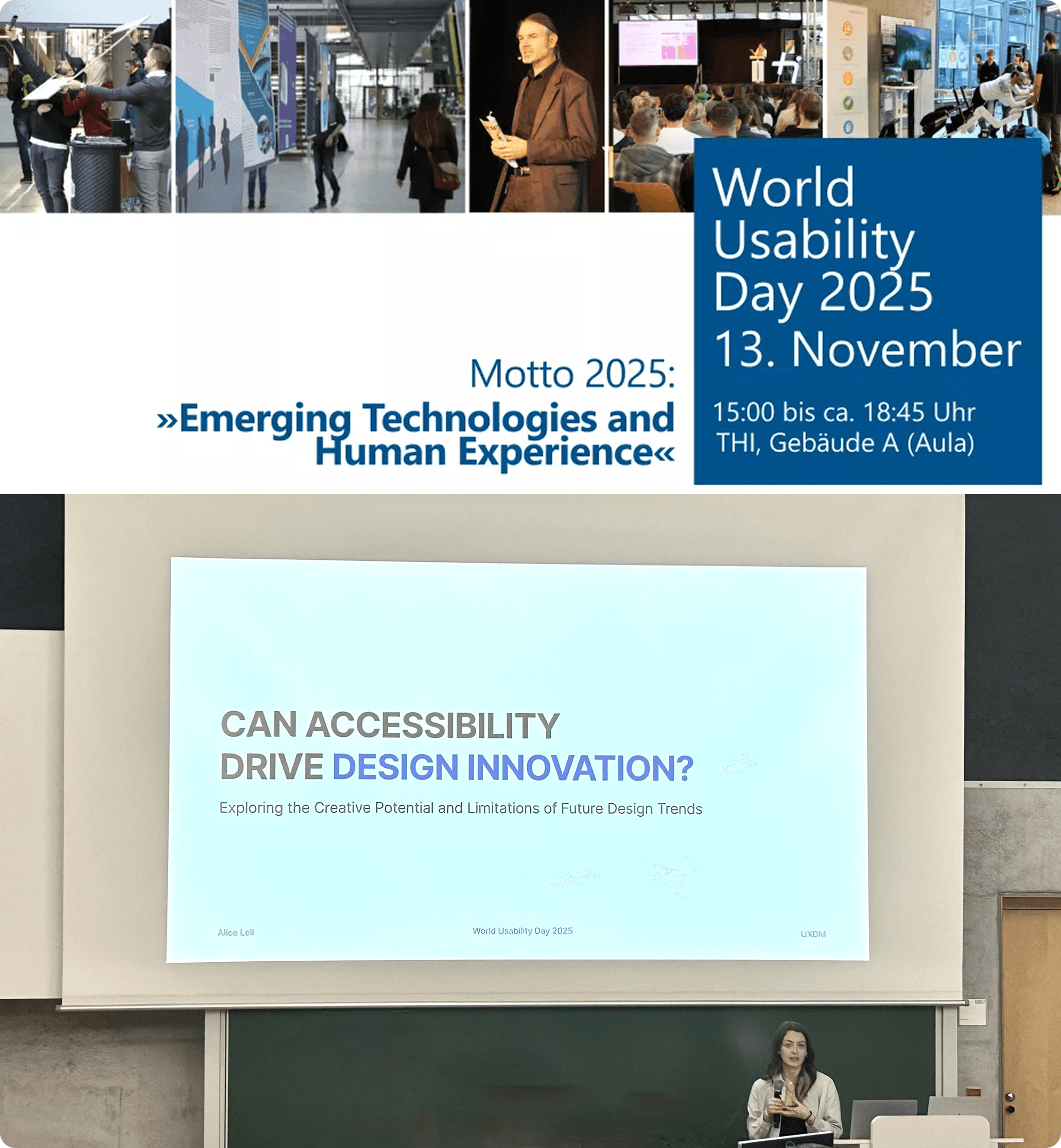
Following the completion of my Master’s thesis, I was selected to present my research at World Usability Day 2025 at Technische Hochschule Ingolstadt.
The event included presentations by academics and industry representatives highlighting current developments in usability and user experience. Presenting my thesis in this context provided the opportunity to share my research findings with a broader academic and professional audience.
Other projects
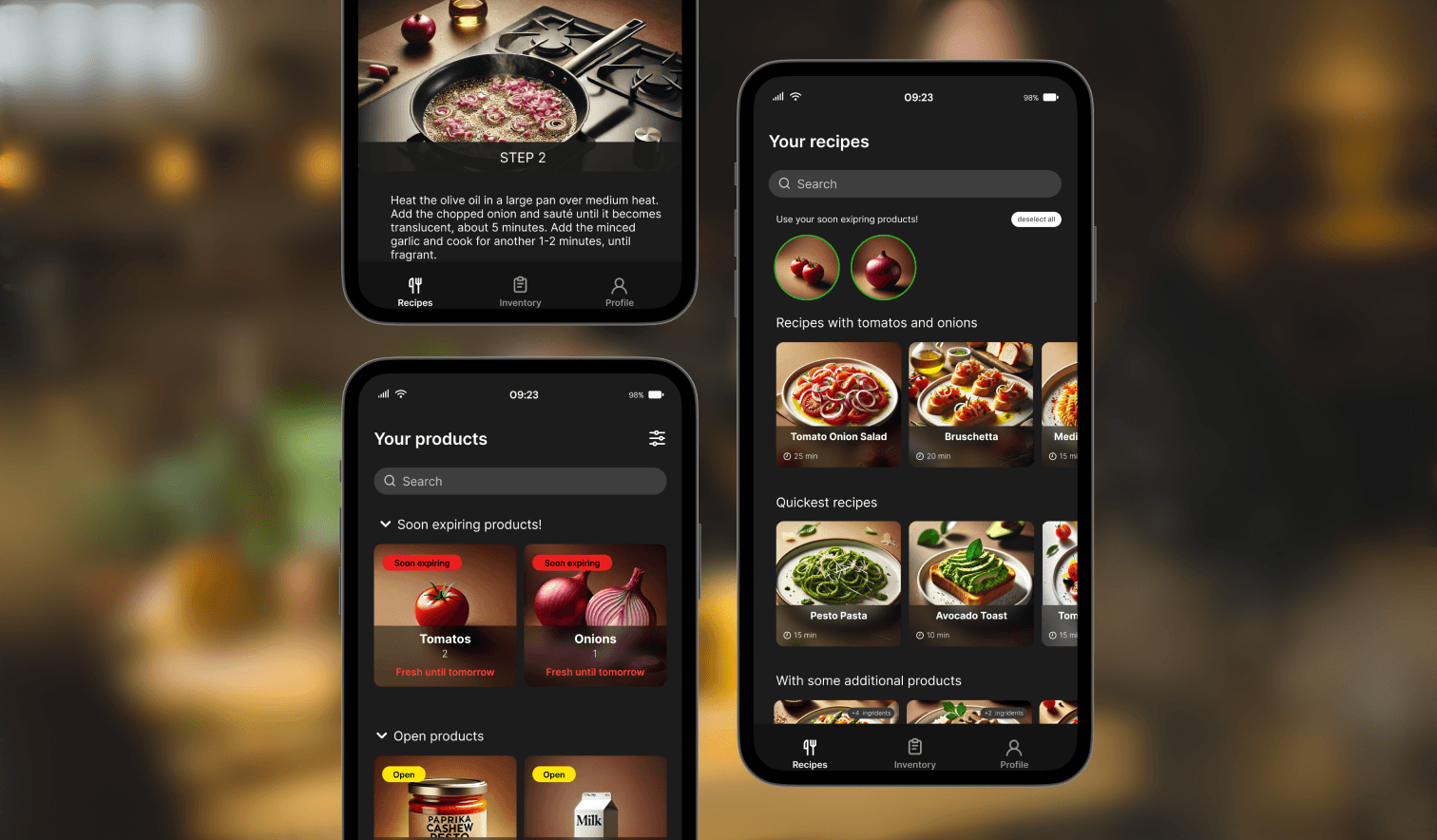
CookGenius: A Smart Cooking Assistent
A generative AI–powered app that reduces food waste by turning available ingredients into personalized recipes.
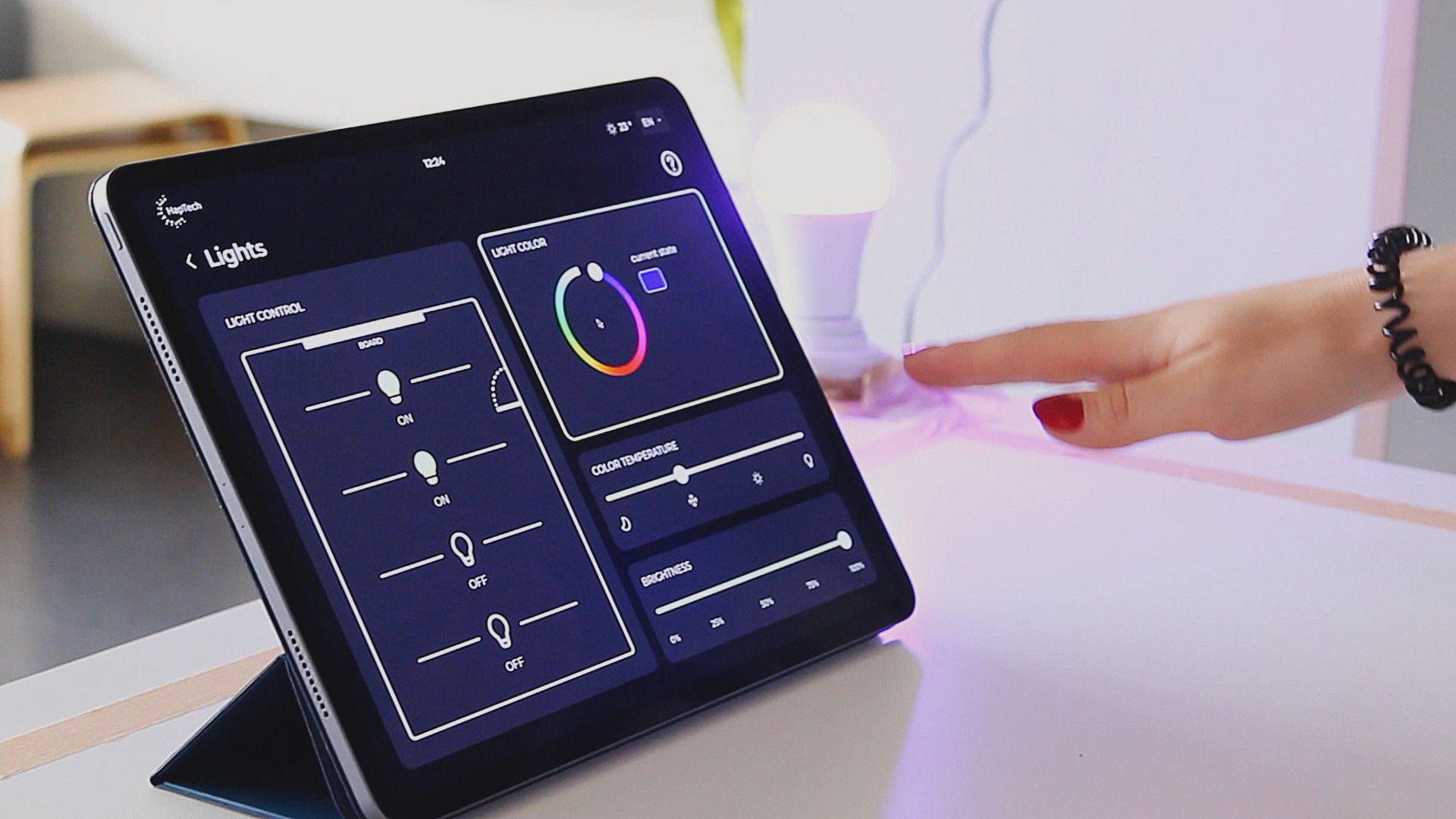
HapTech: Intelligent controls through mid-air haptic interaction
HapTech allows users to control essential classroom features effortlessly without the need to physically touch switches or buttons.