CookGenius: A Smart Cooking Assistent
A generative AI–powered app that reduces food waste by turning available ingredients into personalized recipes.
Context
Individual project
Duration
8 weeks
Grade
1.0
Year
2024
Problem Statement
Food waste in home kitchens remains a significant and avoidable issue.

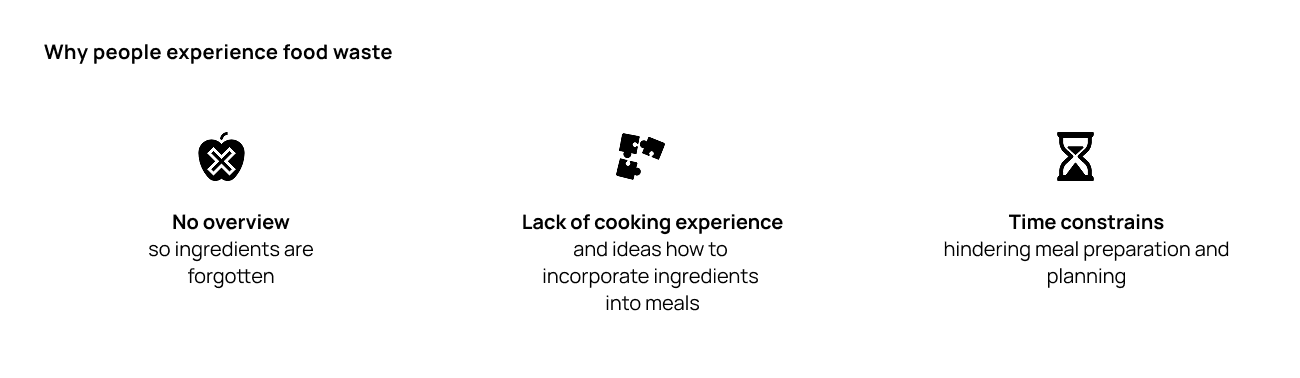
Many people struggle to keep track of ingredients, plan meals efficiently, and use what they already have. This leads to unnecessary food waste, causing financial strain and contributing to environmental impact. A solution is needed that helps users manage ingredients smarter and reduce food waste during everyday cooking.
The Solution
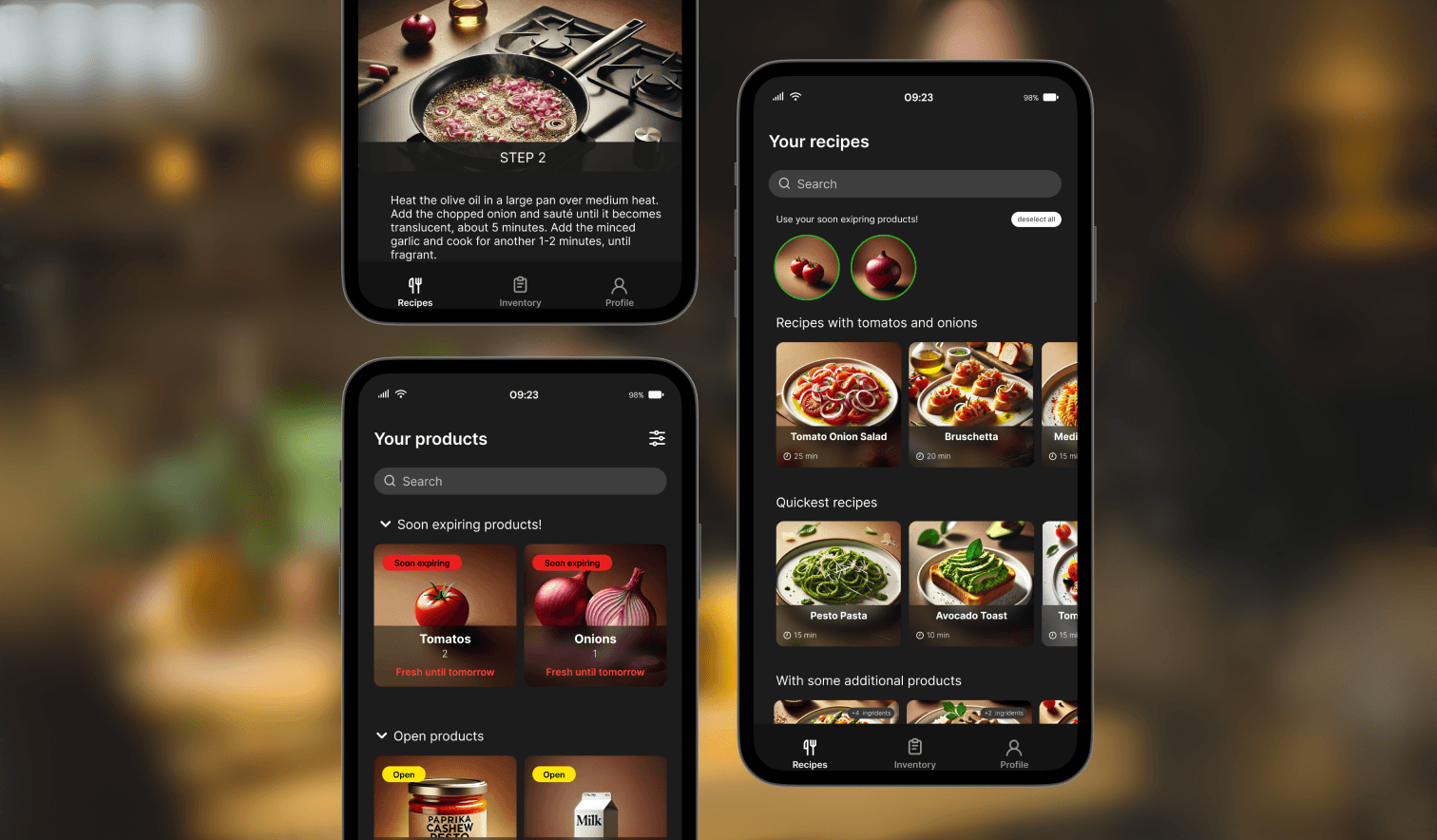
A smart cooking app that helps you use your ingredients before they go to waste.
The app enables users to efficiently use the ingredients they already have by generating personalized recipe suggestions tailored to their taste, dietary needs, and cooking skills. This ensures that ingredients are used before they spoil, helping reduce food waste and making everyday cooking easier.
User Research
Quantitative & Qualitative User Research
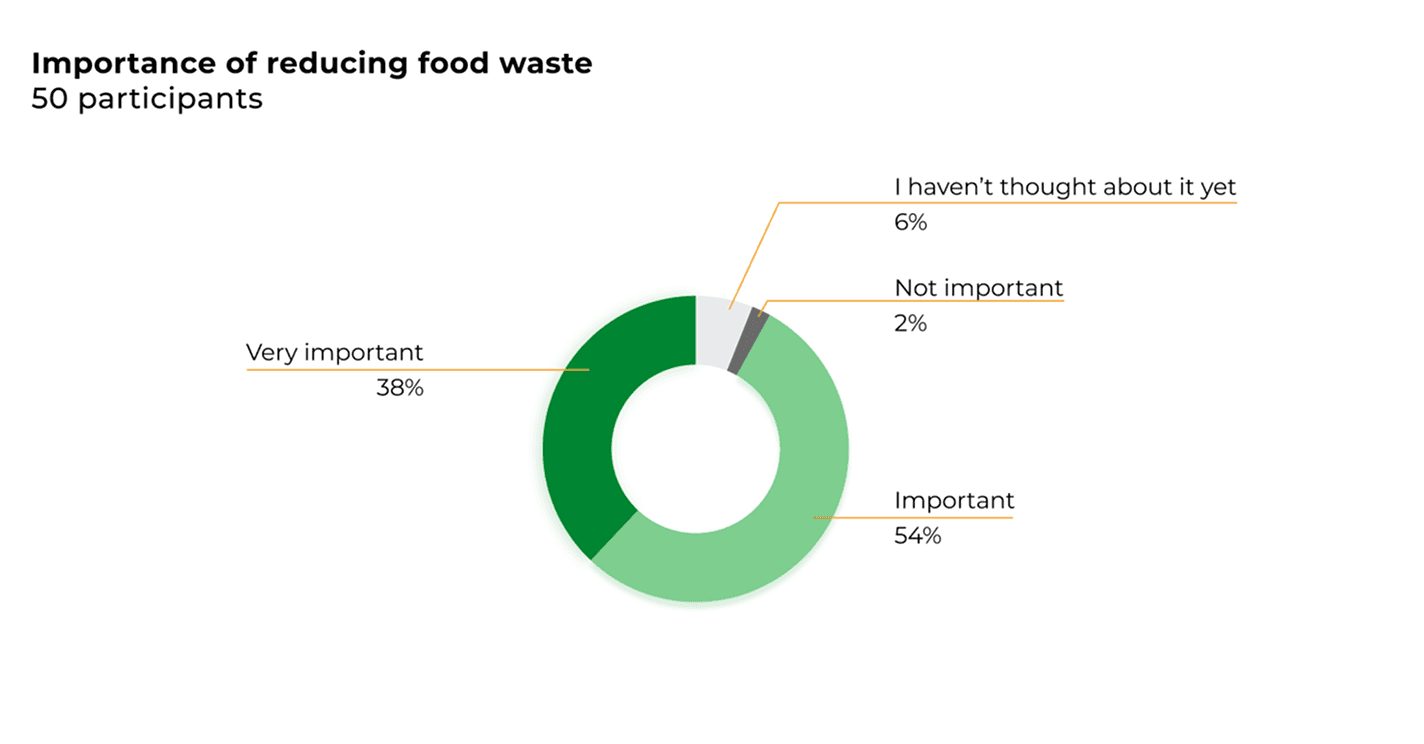
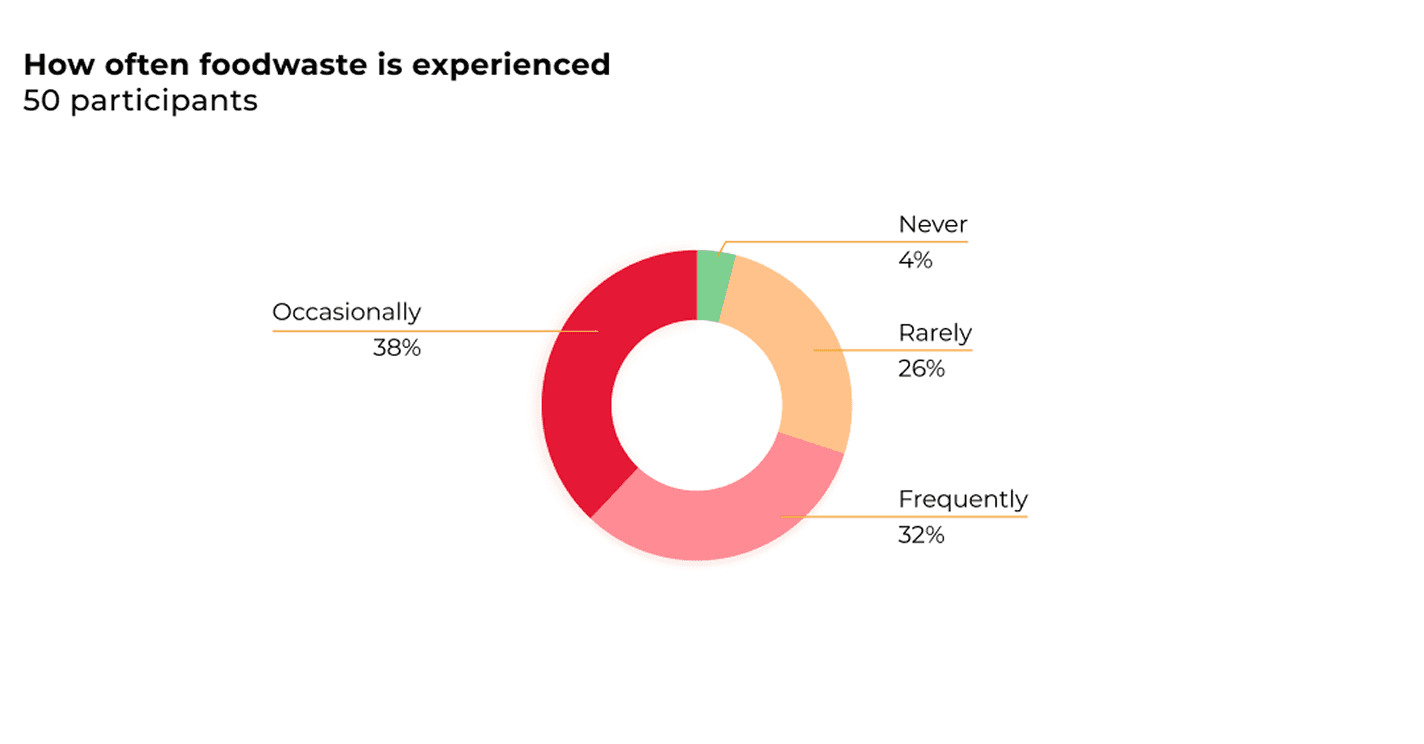
To understand cooking habits, preferences, and challenges, I conducted an anonymous Google Forms survey targeting students. The survey consisted of 12 structured questions designed to uncover opportunities to simplify cooking and reduce food waste. A total of 50 participants completed the survey, providing valuable quantitative insights that informed the early direction of the concept.
Research Highlights
Target Group & Persona
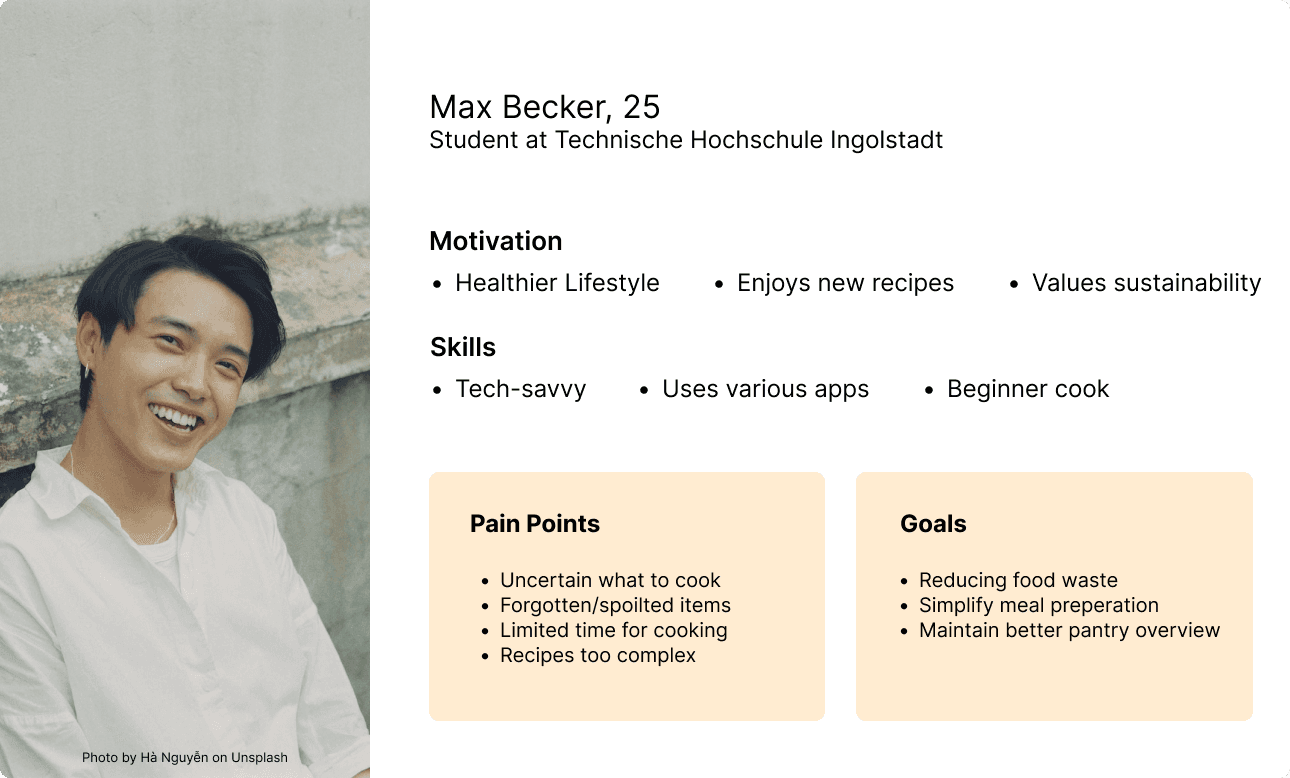
This persona represents the target group of students with busy schedules who value sustainability but still struggle to avoid food waste despite their efforts. He summarizes the most critical pain points from the user research providing a deeper understanding of the user needs.
UX Requirements
Based on the research findings and persona, a selected set of core UX requirements is presented, while the full set was considered during the design process:
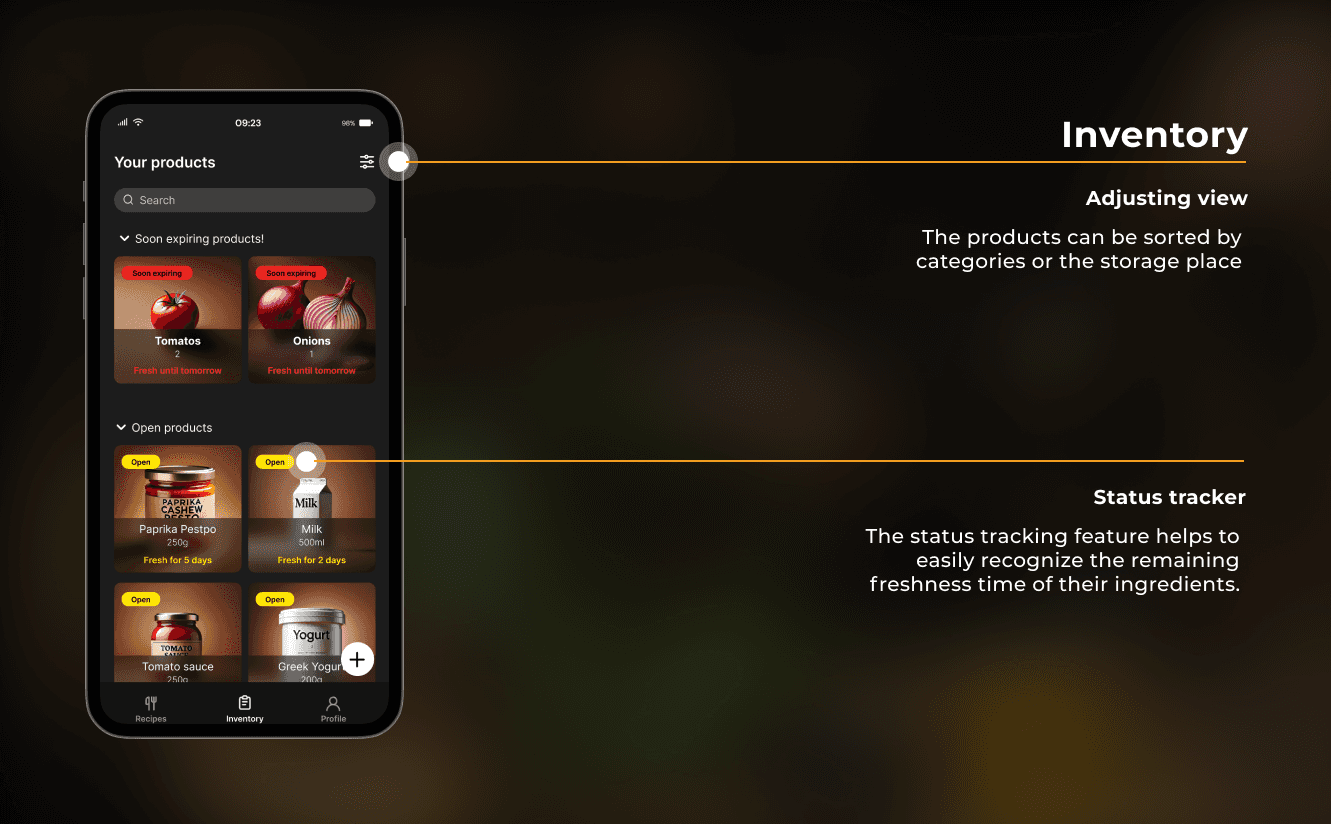
The system must provide a clear, always accessible and visually intuitive overview of the food inventory, including ingredient status (e.g., freshness and expiration).
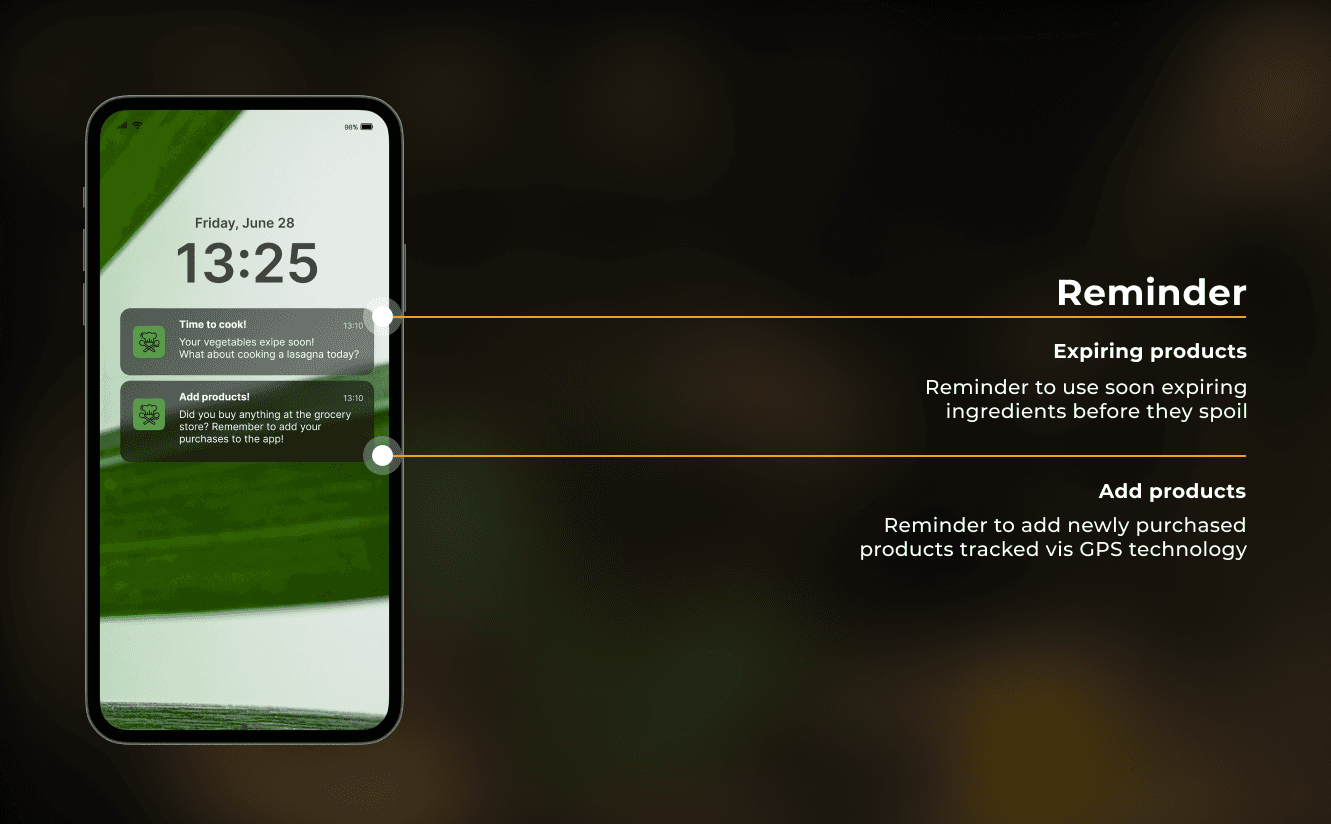
The system must help users minimize food waste by increasing awareness of expiring and unused ingredients through timely and understandable notifications or indicators.
The system must allow efficient and low-friction input of inventory data to minimize user effort during tracking.
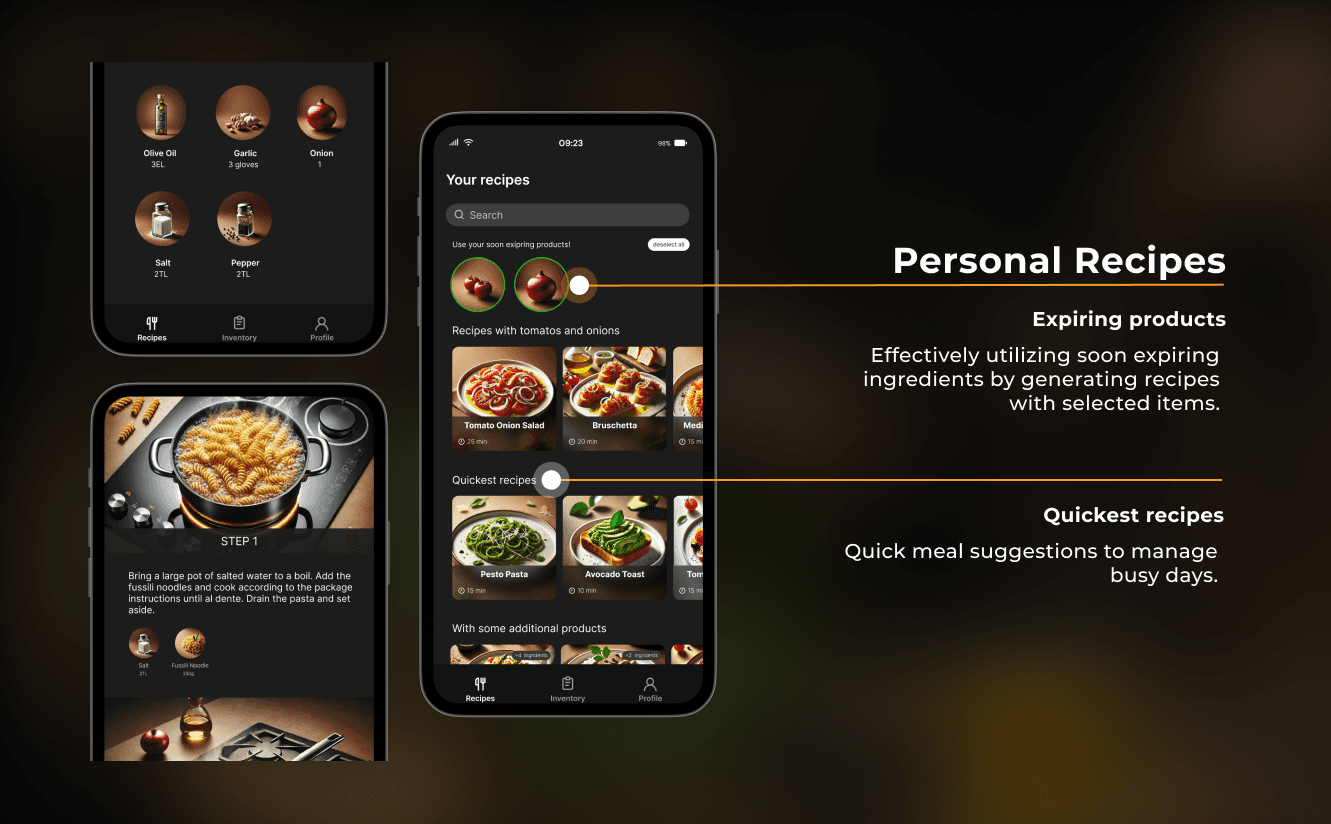
The system must support users in making meal decisions by suggesting recipes based on available ingredients.
Concept: AI-Enhenced Solution
CookGenius utilizes generative AI to address food waste and simplify meal preparation.
The generative AI-based App provides:
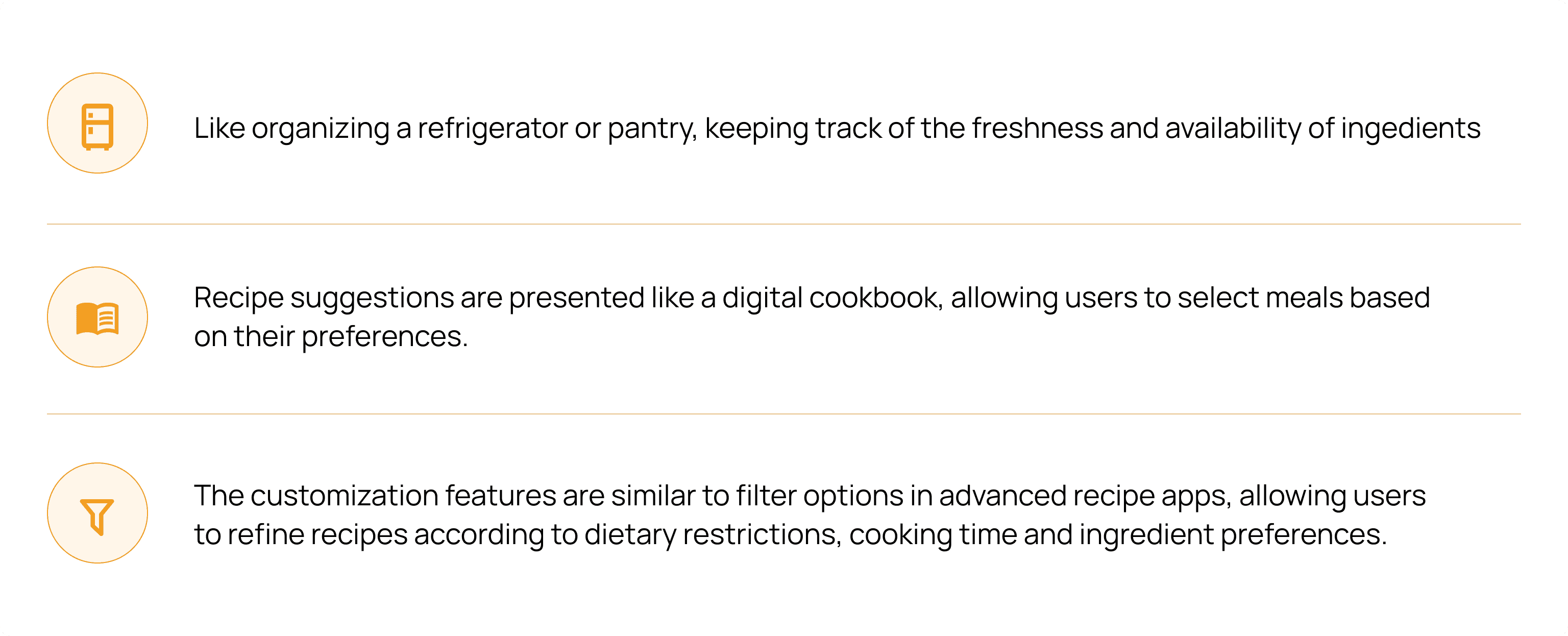
Tracking available ingredients via a mobile inventory
Customization for personal preferences such as dietary preferences, skill level, and taste preferences
With generative AI, the app creates personalized recipe recommendations based on these inputs and the ingredients in their inventory. This ensures users receive tailored recipes that align with their preferences and help them utilize ingredients effectively, minimizing food waste.
Push-Reminder for soon expiring products
Mental Models
User Flow
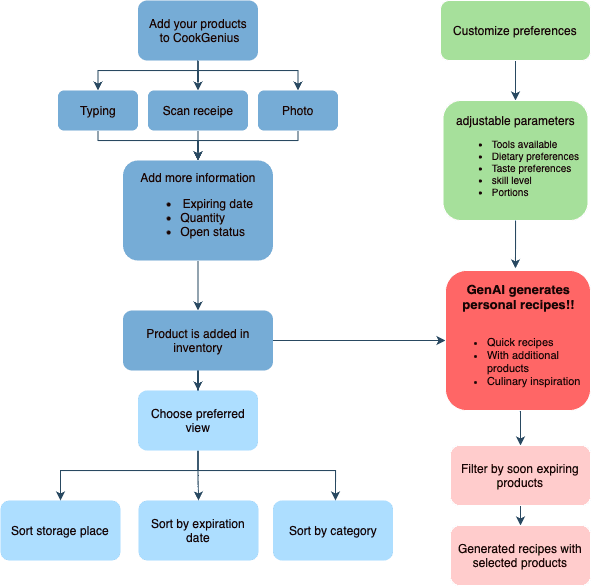
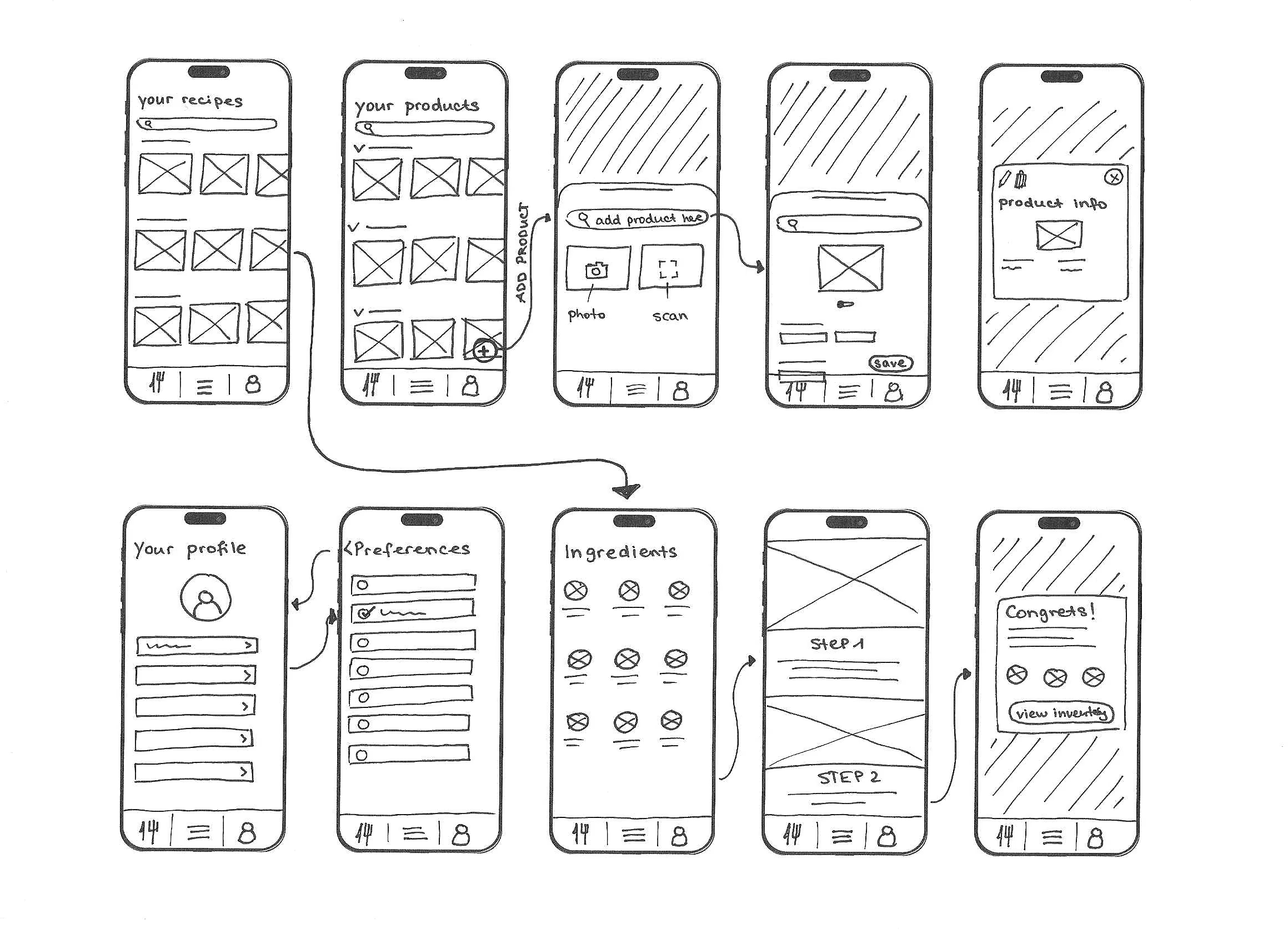
Sketches and Wireframes
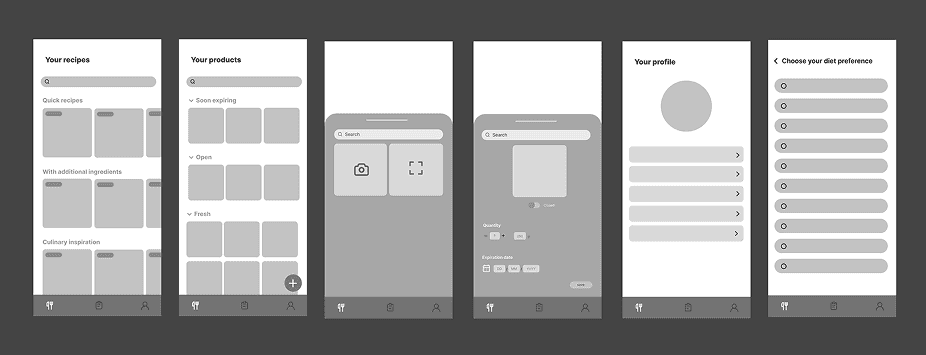
First paper sketches and wireframes were made to quickly validate structure ideas. The focus was set on clearity and simple navigation.
Applying Design Principles
To optimize the interface, several key design principles were applied to ensure usability and
efficiency:
Make the Main Actionable Targets Easy to Reach (Fitts’ Law)
Place Related Elements in Common Areas (Law of Common Region)
Use Familiar Scenarios and Logic (Jakob’s Law)
Use Simple Structures and Avoid Complex Shapes (Law of Prägnanz)
Place Grouped Elements Close to Each Other (Law of Proximity)
Divide Content into Small Chunks (Miller’s Law)
Final Design

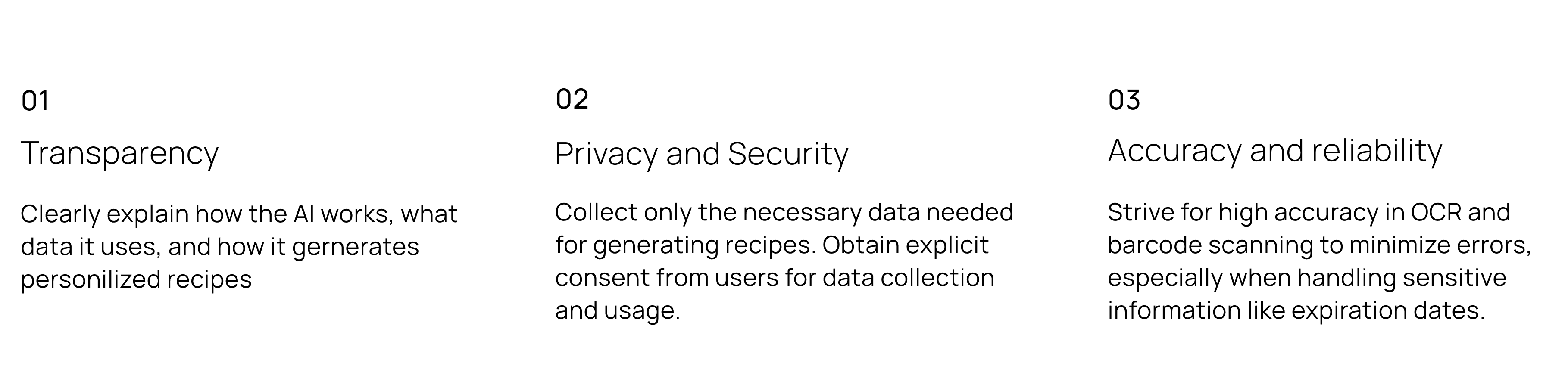
Ethical Considerations
Other projects

HapTech: Intelligent controls through mid-air haptic interaction
HapTech allows users to control essential classroom features effortlessly without the need to physically touch switches or buttons.
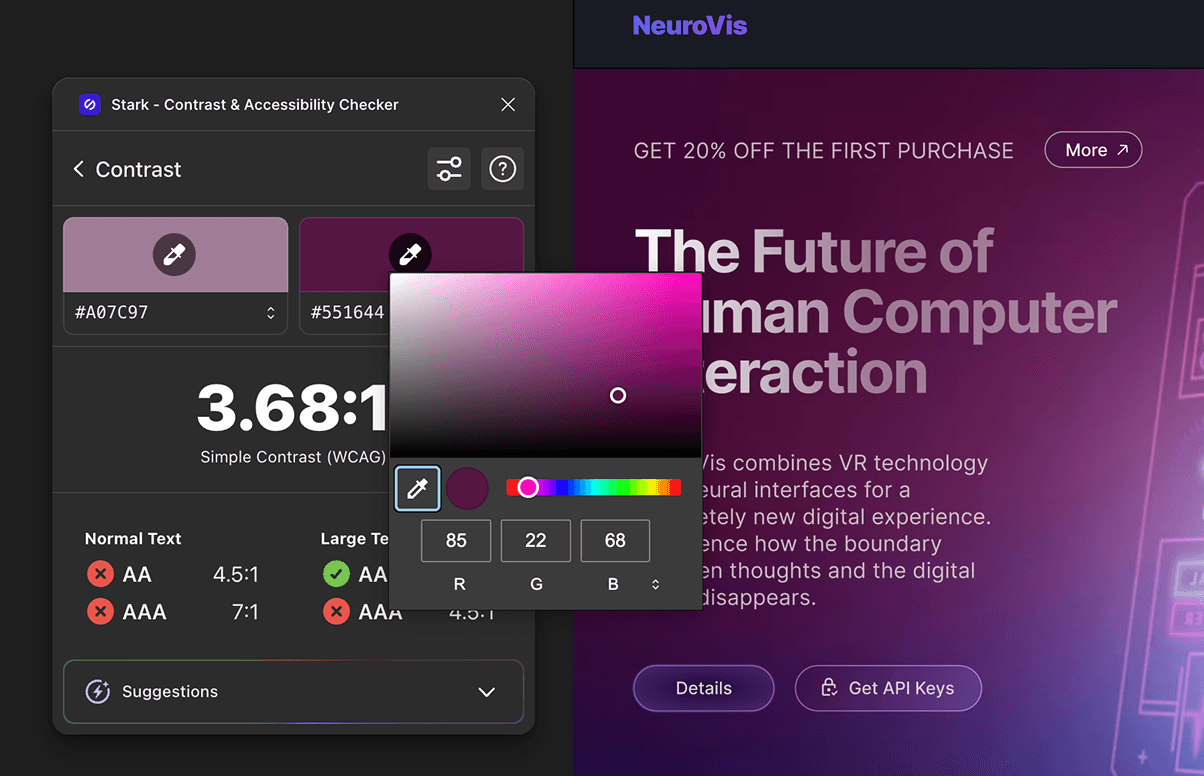
Master's Thesis: Can Accessibility Drive Design Innovation?
Exploring the creative potential and limitations of future design trends